We often encounter numerous limitations throughout our lives. However, we need to consider whether those limits are truly the end of our actual abilities or merely psychological barriers we have built ourselves. A famous psychological experiment that provides an answer to this is the “Flea Experiment”
1. The Flea’s Amazing Potential and the Trap of the Glass Ceiling
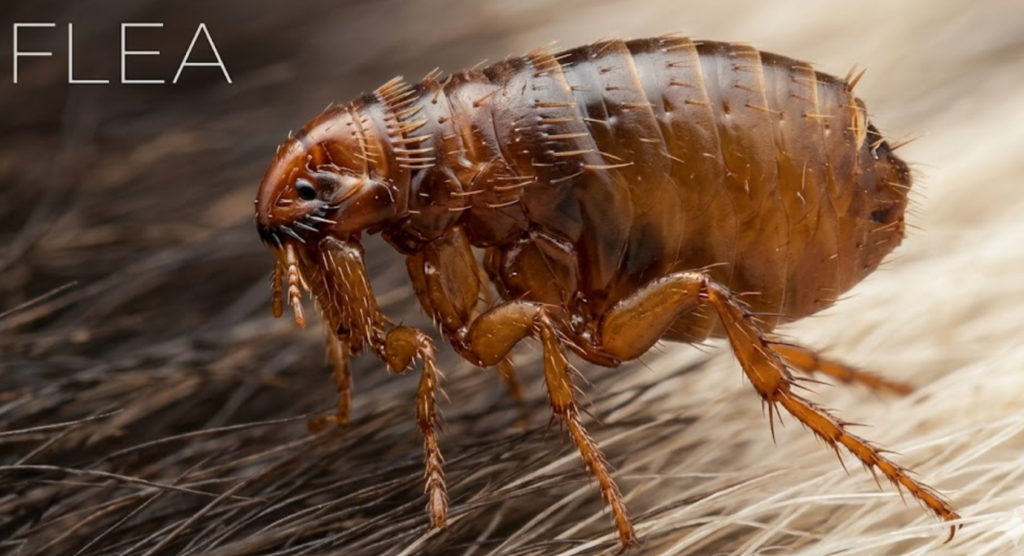
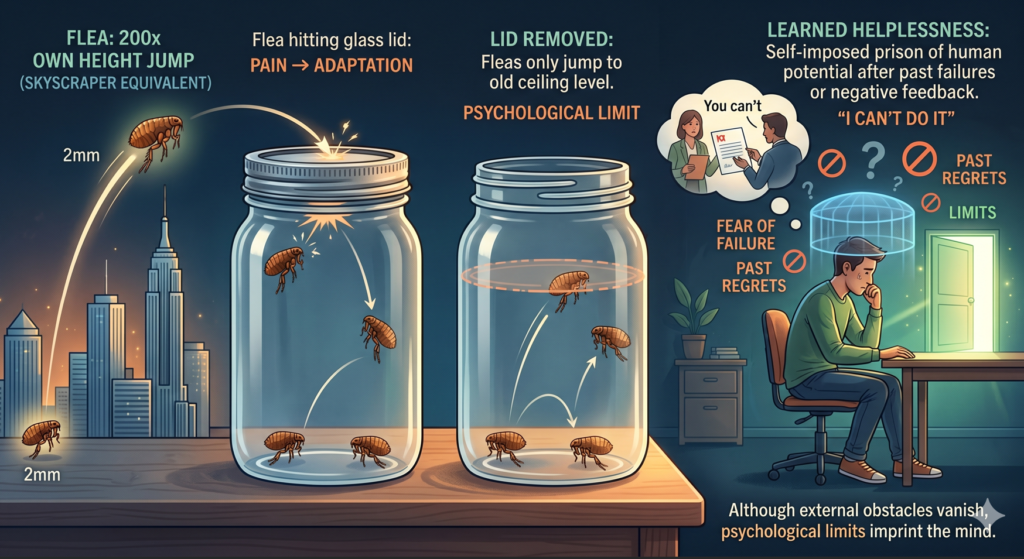
Despite its tiny 2mm body, a flea is an insect with incredible jumping power, capable of leaping 200 times its own height. For a human, this would be equivalent to jumping over a skyscraper in a single bound.
However, an interesting change occurs when you confine these fleas in a glass cup or a jar with a lid. Initially, the fleas try to jump as high as they normally do, but they repeatedly experience pain as they hit the glass ceiling. After about a day, the fleas adjust their jumping power to leap only as high as the point where they no longer hit the ceiling.
2. A Self-Imposed Prison: ‘Learned Helplessness’
The most surprising fact happens in the next stage. Even when the experimenter removes the glass lid, the fleas never jump as high as they once did. Although the physical obstacle—the lid—has vanished, a psychological limit has been imprinted in the flea’s mind: “Jumping higher hurts” or “I cannot jump beyond this point.”
This phenomenon applies equally to us humans. “Learned Helplessness” is the act of imprisoning our own potential by saying “I can’t do it” after experiencing past failures, receiving negative feedback from those around us, or going through hardships.
⚡️ The Narrative Twist : Which Flea Are You?
The story of the flea that castrated its own jumping power within a glass jar resonates deeply. However, there are “legendary fleas” who left a completely different historical record. These are the fleas encountered by the late Chung Ju-yung, the founder of Hyundai Group in Korea, during his youth at a laborers’ lodging at the Incheon docks.
3. The ‘Strategic Drop’ of the Unyielding Fleas
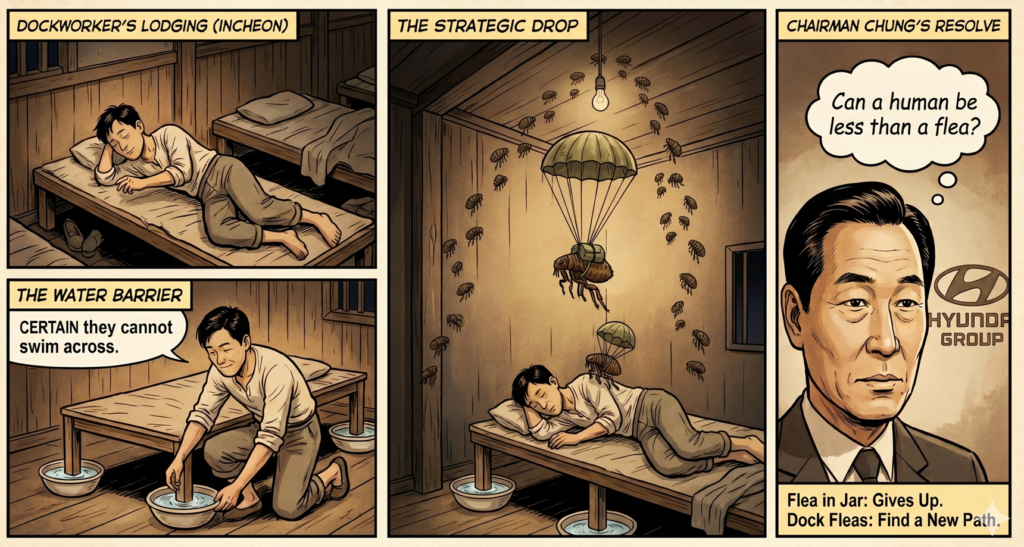
At the time, the lodging was so infested with fleas (often referred to as bedbugs in some versions of this tale) that it was impossible to sleep. To defend himself, Chairman Chung placed bowls of water under each of the four legs of his bed, creating an ironclad barrier. He was certain that “primitive insects could not possibly swim across.”
However, a few days later, he was astonished to find the fleas biting him again. When he turned on the light, he witnessed a shocking sight: The fleas were crawling up the walls to the ceiling and then accurately aiming and dropping vertically onto his body.
4. “Should a Human Be Less Than a Flea?”
Witnessing this, Chairman Chung felt as if he had been struck on the head. While the flea in the glass jar gave up its ability in the face of an obstacle, the fleas in the lodging found a “new path” by heading to the ceiling when confronted with the water barrier.
Later, in his autobiography, he recalled the moment as follows:
“Even a tiny flea squeezes out every drop of wisdom and gives its all to achieve its goal. Should a human, the master of all creation, speak of giving up just because they encountered a single obstacle?”
5. How to Awaken the Potential Within Us
When we face hardships, we often set our own limits, much like the fleas trapped under a glass ceiling. However, the top 1% who succeed are different. When the path is blocked, they climb the wall; when the wall is blocked, they move to the ceiling.
The key to true innovation and success is breaking through the glass ceiling of the “impossible” stereotype and relentlessly searching for the “Way to Solve,” just like those fleas.
I also frequently used the famous quote by Chairman Chung Ju-yung, “Have you tried it?”, throughout my 30-year career in manufacturing.
When confronted with seemingly impossible productivity goals at factories in Vietnam, China, and the U.S., I always thought of these fleas and their “strategic drop.” To foster a shift in mindset among the 500+ employees, I divided them into groups of 50 and personally conducted mindset training sessions. During those sessions, this very story of the flea was one of my core lecture topics.
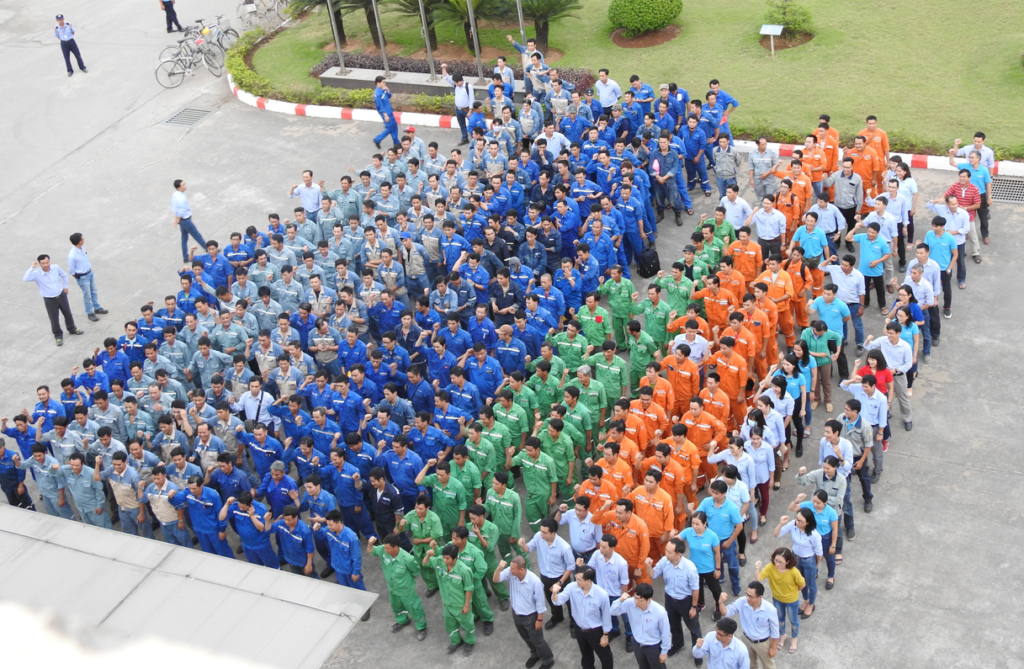
This transformation in mindset, coupled with our rallying slogan, “Together, We Can Do It,” enabled us to achieve a 30% productivity increase after a six-month innovation campaign.
In my upcoming blog posts, I will sequentially share case studies of successful innovation achieved through the actual application of Lean Tools in overseas factories. I hope that you will try applying these methods when encountering challenges during your own innovation activities on the shop floor.
“The obstacle didn’t stop the flea; it simply changed the flea’s direction.”
Have you uncovered insights from the flea experiment that can transform you into a high-performing leader?”
Click here to read more about our manufacturing insights.
Productivity and Safety: Employee Engagement
How to optimize production flow with process Analysis and LOB
8 Core Pillars of Total Productive Maintenance
Discover more from mfginsights.net
Subscribe to get the latest posts sent to your email.