In the global manufacturing arena, the word “innovation” often brings to mind massive capital expenditures, high-tech automation, or radical layout re-engineering. However, seasoned industry experts who have spent decades balancing shop-floor metrics agree on one fundamental truth: sustainable corporate competitiveness is rarely built on giant, single-event projects. Instead, it is the compounded total of micro-improvements executed every single day. This is the beating heart of Lean management and the core pillar of the Toyota Production System (TPS): Kaizen.
To drive true operational excellence and maximize profitability, factory leaders must embed a systematic framework of continuous improvement directly into their organizational DNA. Let us explore the core philosophy, quantitative economic benefits, and strategic execution steps of Kaizen within a modern production environment.
1. The True Essence of Kaizen: A Paradigm Beyond Simple Correction
Derived from the Japanese words Kai (change) and Zen (good), the literal translation of Kaizen is simply “change for the better.” In the context of industrial operations and Lean scaling, however, it represents a deep cultural paradigm anchored by three non-negotiable principles:
- Uncompromising Continuity: It is not a one-time workshop or a quarterly event; it is an ongoing, infinite process embedded into every single shift.
- Total Employee Engagement: Driving waste out of a value stream is not the exclusive domain of an isolated continuous improvement team or senior plant managers. Every individual—from frontline assembly operators to the executive suite—acts as a primary driver of change.
- Absolute Focus on Gemba: This approach is rooted in the belief that actionable solutions never originate in executive boardrooms. They are found on the shop floor (Gemba)—the actual site where value is created and operational anomalies occur.
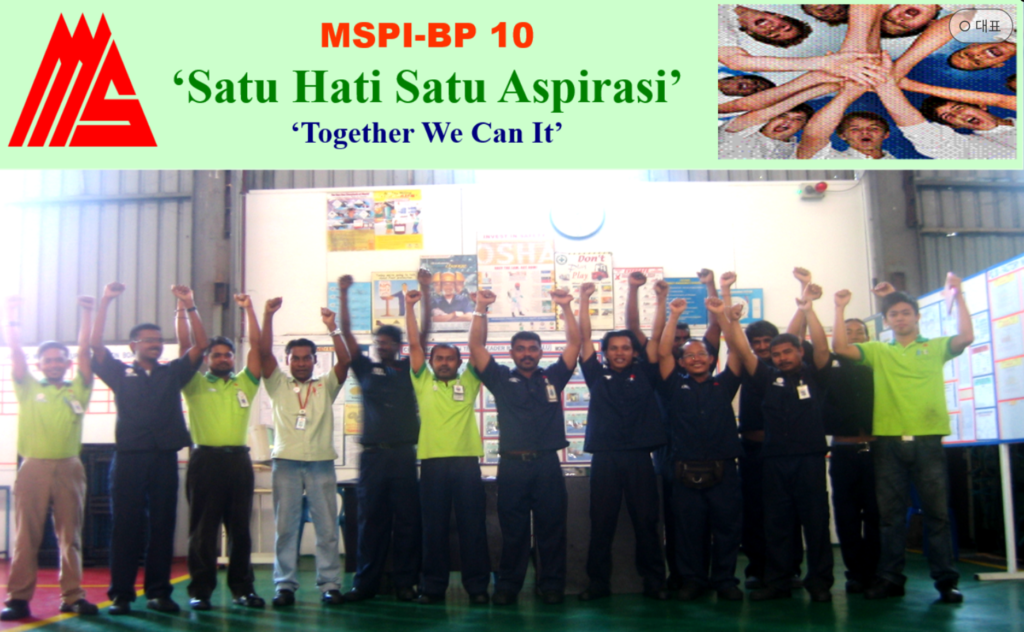
Click here to see Kaizen Competition Video
Case Study of Kaizen in Malaysia
2. Case Study: Maximizing Team Velocity Through a Monthly Kaizen Competition
Fostering a highly responsive Kaizen culture requires a blend of structural discipline and communal recognition. In global hubs spanning Malaysia, Vietnam, and China, a highly effective tactical execution method is running a formalized Monthly Kaizen Competition. This turns operational optimization into an engaging, high-spirited event.
- Structured Cross-Functional Presentations: Individual teams step up to present real-world business cases where they successfully deployed 5S frameworks, ergonomic motion analysis, or quality defect countermeasures, sharing clear historical baselines with their peers.
- All-Hands Engagement & Knowledge Sharing: The entire production crew focuses on these presentations, cross-pollinating best practices across different assembly lines and operations.
- Formal Executive Recognition: Plant leadership selects the “Best Team” and “Most Impactful Case,” distributing formal rewards and performance incentives. This recognition acts as a psychological catalyst, supercharging individual motivation.
- Targeted On-Site Practical Training: These events are paired with continuous education modules on the 7 Basic QC Tools, standard industrial safety protocols, and upcoming product design briefings to sharpen floor capabilities.
- Unified Alignment Chanting: Teams wrap up their morning huddles and training sessions by vocalizing operational slogans like “Together We Can Do It,” instantly locking in a high-performing team cadence.
3. The Economics of Kaizen: Why It Outperforms Heavy Capital Expenditure
Many corporate decision-makers default to heavy automation investments because the physical change is instantly visible. However, systematic Kaizen demonstrates why low-cost, high-frequency ideas generate an unassailable Return on Investment (ROI).
A. The Compounding Effect of 1%
Statistically, if an operation improves its incremental throughput or process efficiency by just 1% every day, the cumulative advancement renders a staggering $1.01^{365} \approx 37.7$-fold leap in performance over a single year. Shaving a mere two seconds off an operator’s walking distance via a minor workstation layout change frequently yields a better net return than a multimillion-dollar robotic arm that introduces structural rigidity.
B. Relentless Eradication of the 7 Deadly Wastes (Muda)
A disciplined continuous improvement framework turns every employee into a sensor for waste. It targets the core manufacturing inefficiencies that quietly erode gross margins:
- Overproduction: Manufacturing items ahead of downstream pull.
- Waiting: Operators idling due to machine cycles or material delays.
- Transportation: Unnecessary movement of materials between lines.
- Overprocessing: Putting more work into a part than the customer requires.
- Inventory: Excessive WIP clogging floor footprint and tying up cash flow.
- Motion: Poor workstation ergonomics causing operators to bend or reach excessively.
- Defects: Scrap and rework loops that inflate the Cost of Poor Quality (COPQ).
C. Psychological Ownership and Crises Resilience
When operators are given the authority to identify and eliminate waste, their relationship with the company shifts from transactional labor to active stakeholders. An organization packed with well-trained, proactive problem solvers can adapt its operational model on the fly to survive sudden supply chain shocks or macro market shifts.
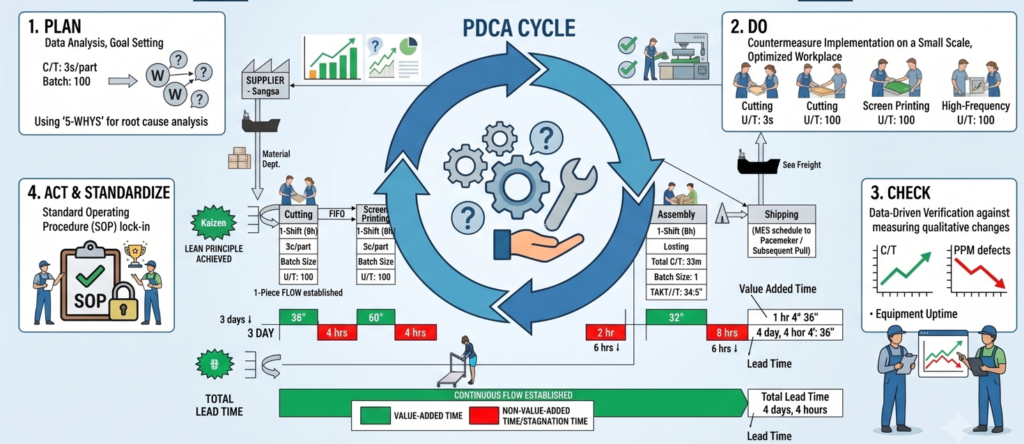
4. The 4-Step Action Process: Leveraging the PDCA Cycle
To ensure shop-floor ideas translate into measurable, scalable metrics, avoid relying on vague, unsystematic suggestions. Instead, enforce the structured PDCA Cycle:
- PLAN: Gather real-time baseline data and map the current state. Use structured root-cause tools like the 5-Whys Technique to peel back operational symptoms until the core engineering or behavioral flaw is exposed.
- DO: Formulate tactical countermeasures and deploy them on a small scale. The secret here is speed over theoretical perfection—test what can be executed immediately with zero or low capital investment.
- CHECK: Verify the post-execution data against your target KPIs. Analyze quantitative changes in Cycle Time (C/T), defect parts per million (PPM), and equipment uptime.
- ACT & STANDARDIZE: If the data confirms a positive breakthrough, formally document the change into the Standard Operating Procedure (SOP) to permanently lock in the gain. If the experiment falls short, route the insights back into the Plan phase for a deeper re-analysis.
5. Industrial Leadership Insights for Global Scaling
Having directed and overseen numerous continuous improvement initiatives across diverse manufacturing environments in East Asia and Western markets, I recommend focusing on three core operational leadership tactics:
- Protect the Ideation Pipeline: The quickest way to kill a continuous improvement culture is for supervisors to respond with dismissive phrases like, “We tried that five years ago,” or “That won’t impact our margins.” Even minor suggestions must be acknowledged and run through a transparent feedback loop.
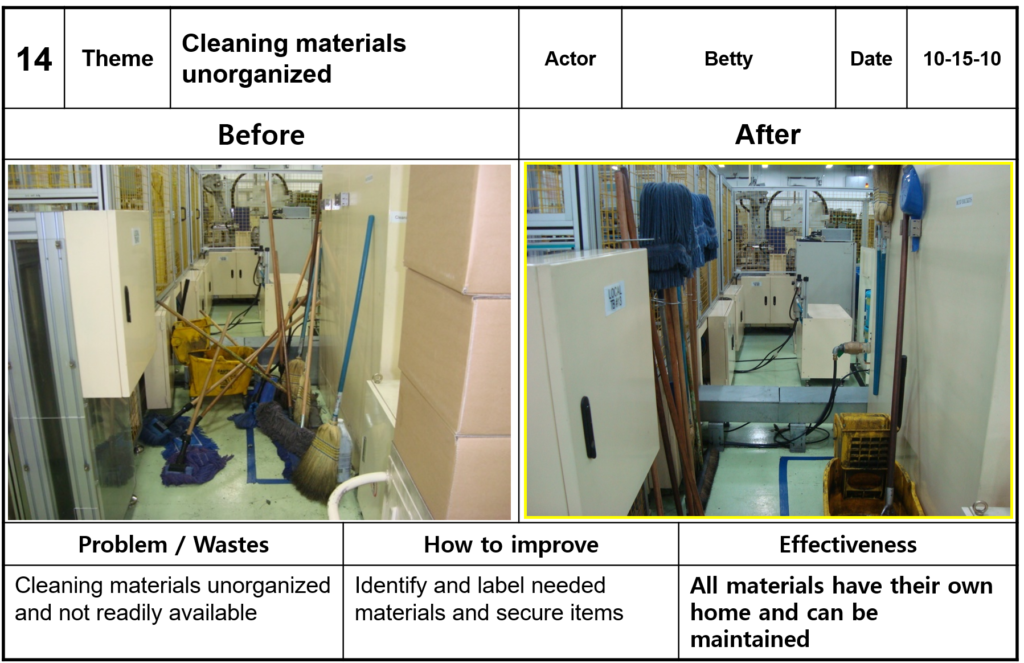
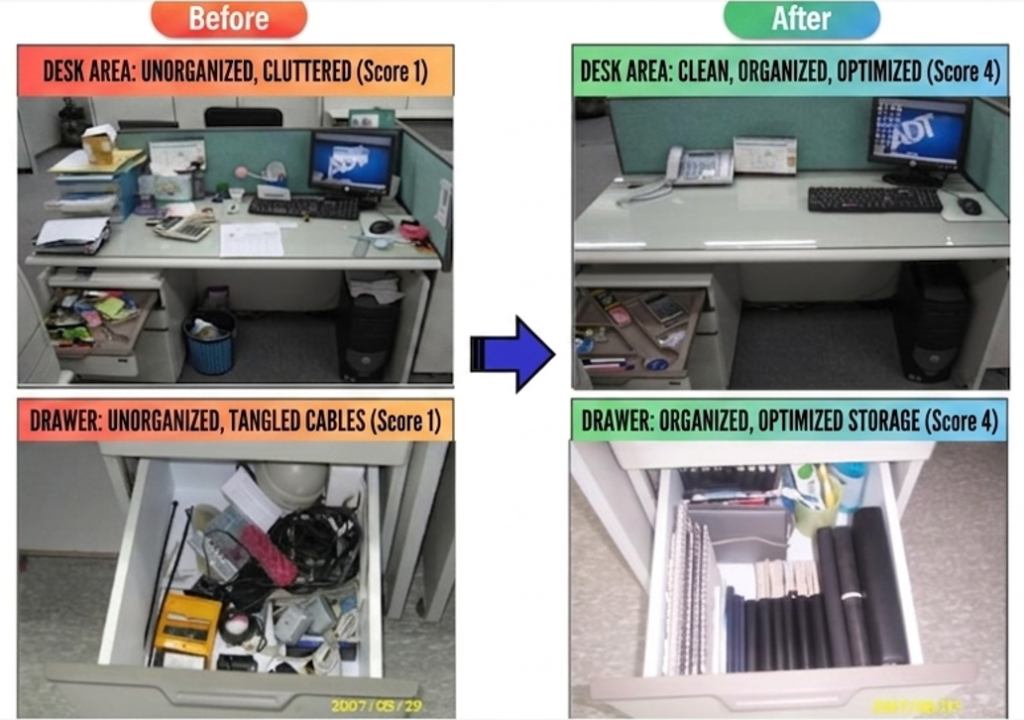
- Enforce Aggressive Visual Management: Post clear, highly visible “Before vs. After” performance charts, photos, and safety tracking boards right at the workstation. When employees see their ideas visibly optimizing the factory floor, their collective pride and engagement climb.
- Celebrate the Small Wins: Do not hold back recognition while waiting for a project that saves hundreds of thousands of dollars. Start by celebrating a simple workstation adjustments that eliminates operator back strain or cleans up a tool rack. These micro-successes build the cultural momentum required to eventually drive massive enterprise transformations.
Conclusion: Innovation is a Reflection of Operational Attitude
At its deepest level, Kaizen is not a mere set of manufacturing toolkits or corporate charts—it is an organizational attitude. It is a shared refusal to accept yesterday’s performance as the benchmark for tomorrow.
Reflecting on decades of global plant management, the enterprises that dominate highly volatile global markets are rarely those with the deepest capital pockets. Rather, they are the ones that relentlessly execute incremental improvements day after day. Look closely at your assembly lines, listen to the cadence of your machinery, and talk to your frontline operators today; your next breakthrough is waiting right on the shop floor.
“Hungry for more? Check out these related posts.”
- Link 1: The True Power of 5S: 5S Methodology Lean Strategy
- Link 2: SMART KPI : How to Turn SMART KPIs into Real-World Execution
Discover more from mfginsights.net
Subscribe to get the latest posts sent to your email.