On the shop floor, machinery is the most critical asset for generating value. However, no matter how expensive or sophisticated your equipment may be, frequent breakdowns, performance degradation, and minor stoppages can quickly transform a high-value asset into a massive cost center rather than a source of revenue. Alongside Lean continuous improvement, Total Productive Maintenance (TPM) serves as a core pillar of operational competitiveness, eliminating all equipment-related losses to keep machinery at peak physical health. TPM is one of Lean Continuous Improvement tools.
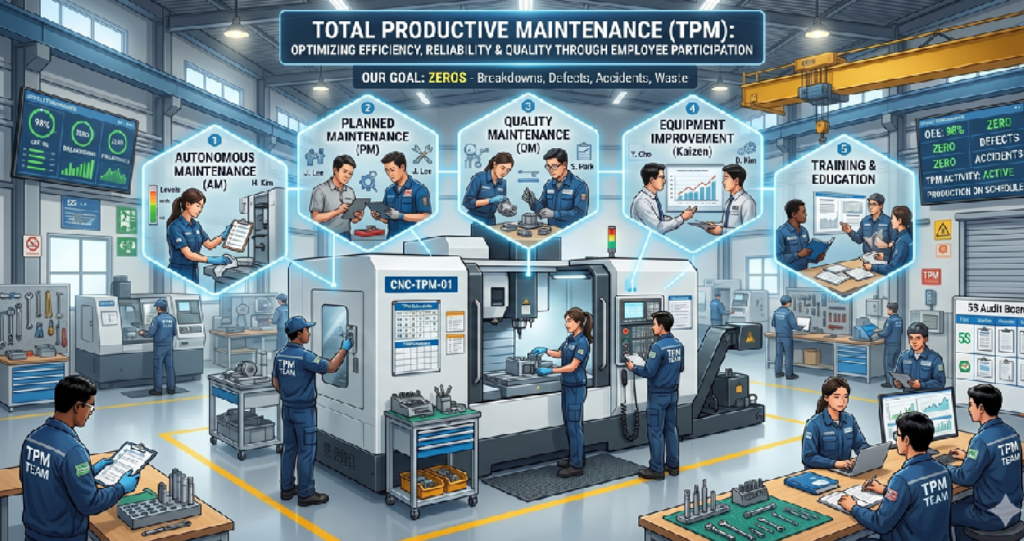
In this comprehensive guide, we will analyze the fundamental essence of TPM and explore pragmatic, high-leverage execution strategies that drive tangible financial and operational results on the shop floor.
1. What is Total Productive Maintenance (TPM)?
Total Productive Maintenance (TPM) is a structured, plant-wide approach to equipment maintenance designed to maximize overall operational efficiency. It demands the active, cross-functional participation of all departments—including production, maintenance, quality, and engineering—to optimize the entire lifecycle of manufacturing equipment.
Historically, manufacturing plants operated under a heavily fragmented logic: “I operate the machine, and you repair it.” TPM completely shatters this siloed mentality, replacing it with an ownership philosophy rooted in Autonomous Maintenance (“I own and protect my machine”). By establishing robust proactive checks and cultural ownership, TPM aims for a trifecta of operational perfection: Zero Breakdowns, Zero Defects, and Zero Accidents.
2. The 8 Pillars of TPM Framework
To successfully institutionalize TPM and build a resilient operational culture, an organization must deploy and integrate eight foundational pillars:
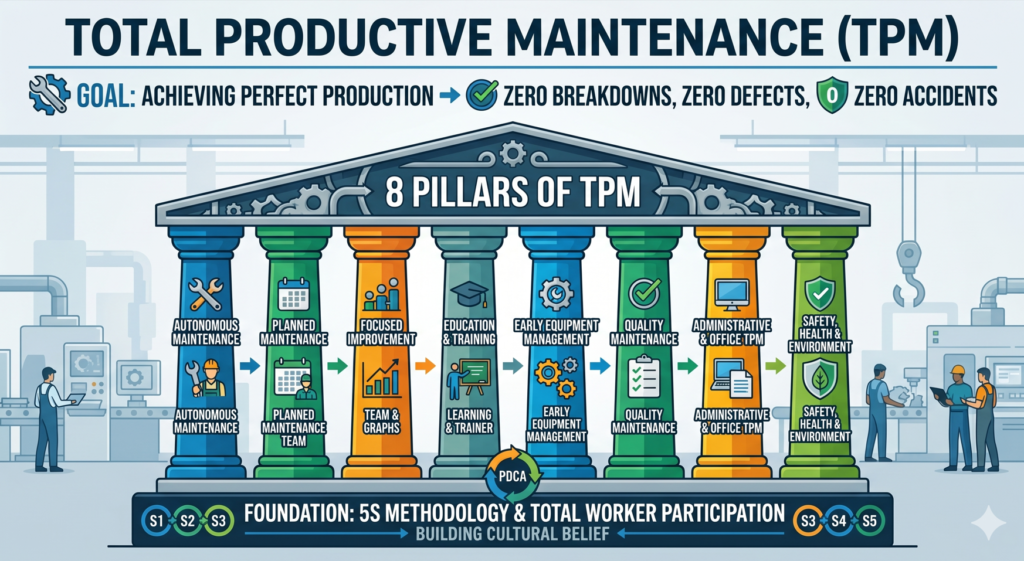
- Autonomous Maintenance (Jishu Hozen): Empowers daily operators to conduct routine inspections, lubrication, and cleaning, allowing them to detect and mitigate early signs of equipment deterioration before failure occurs.
- Planned Maintenance: Utilizes historical data, MTBF (Mean Time Between Failures), and predictive tools to schedule professional maintenance activities, effectively eliminating sudden, reactive breakdowns.
- Focused Improvement (Kobetsu Kaizen): Forms dedicated, cross-functional teams to isolate, analyze, and systematically eliminate chronic losses and systemic bottlenecks.
- Education and Training: Upgrades and standardizes the multi-skilling of operators while equipping professional maintenance technicians with advanced diagnostic and repair capabilities.
- Early Management: Integrates maintenance insights directly into the engineering phase, ensuring that newly commissioned machinery is highly reliable, safe, and inherently easy to maintain.
- Quality Maintenance (Hinshitsu Hozen): Sets and audits precise equipment conditions to guarantee that machinery functions within tolerance, preventing quality defects at the source.
- Office TPM: Applies Lean and administrative process mapping to support functions (logistics, purchasing, scheduling) to eliminate non-value-added waste and improve response times.
- Safety, Health, and Environment (SHE): Fosters a zero-hazard work ecosystem, prioritizing ergonomics, safety protocols, and environmental compliance to sustain morale.
3. Measuring Performance via OEE and the 6 Big Losses
The definitive metric used to gauge TPM performance is Overall Equipment Effectiveness (OEE). To systematically drive OEE upward, high-performing leaders must focus their teams on aggressively isolating and reducing the “6 Big Losses”:
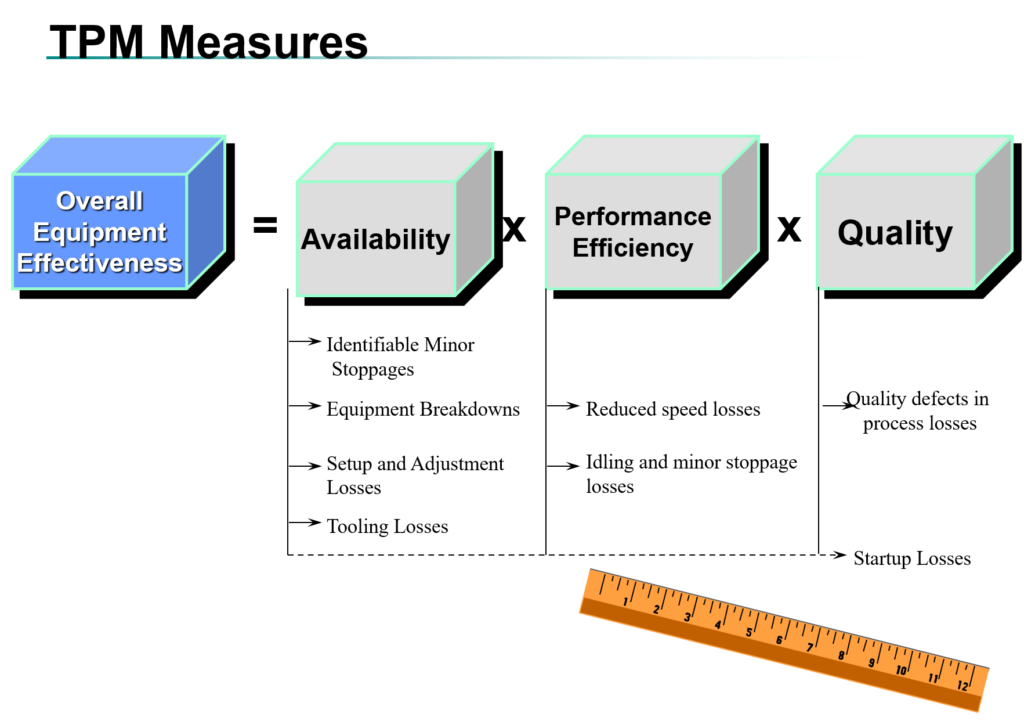
- Availability Losses: Driven by sudden equipment breakdowns (unplanned downtime) and prolonged setup or changeover times.
- Performance Losses: Caused by minor stoppages (idling/short halts) and reduced operating speeds compared to equipment specifications.
- Quality Losses: Triggered by in-process defects, rework, and startup yield losses during initial acceleration phases.
“Expert Insight: Implementing Total Productive Maintenance in the Real World”
“Over my 20 years of corporate consulting, I have found that correct OEE implementation remains a major blind spot for most manufacturers. Most incorrectly rely on Availability alone to gauge equipment performance. Conversely, Samsung Electronics and Samsung SDI stand out by measuring OEE rigorously. This approach reflects a mature, group-wide mastery of Total Productive Maintenance and performance data across Samsung’s manufacturing network.”
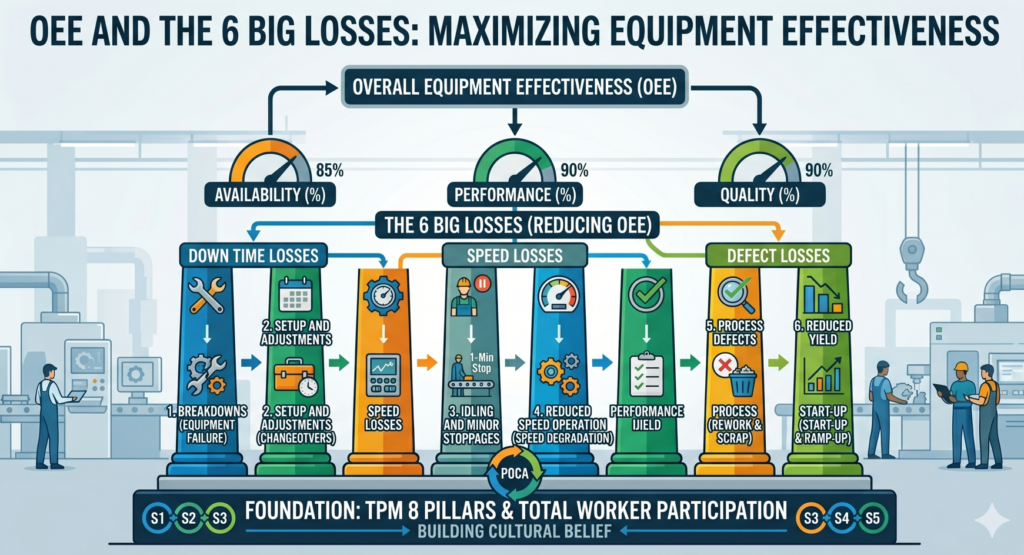
Visualizing, tracking, and mathematically analyzing these losses in real time is where TPM perfectly aligns with the structured, data-driven analytical rigor of Lean Six Sigma.
4. Pragmatic TPM Execution Insights from a Lean Expert
Drawing from over two decades of leading global manufacturing facilities as a plant manager and corporate executive, here are three actionable, high-leverage tactical strategies for implementation:
- “Cleaning is Inspection”: Operators often push back, questioning why they must clean heavy machinery. High-performing leaders redefine cleaning as a vital act of engineering inspection. It is during the detailed wiping down of a machine that loose fastners, micro-leaks, and subtle vibration anomalies are identified before they cascade into catastrophic failures.
- Visual Management Systems: Implement intuitive, immediate visual controls across your lines. Mark proper fluid thresholds with bright indicator bands, and scribe tight bolt positions with high-visibility marking pens. Anyone walking the shop floor should be able to audit the health of an asset within a single second.
- Data-Driven Maintenance Regimes: Replacing high-value wear parts based on pure gut feel or static time blocks introduces immense economic waste. Mature your operations into a predictive regime by documenting component wear life cycles, establishing replacement schedules precisely when predictive data dictates.
Conclusion: TPM is a People Transformation
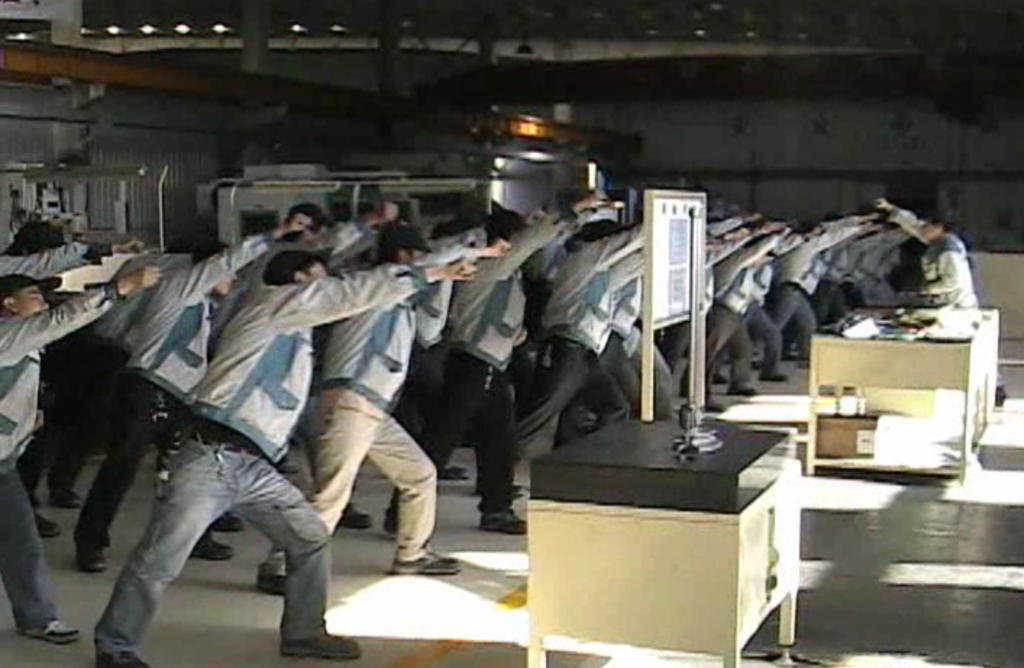
Click to see the movie ; TPM Slogan
The ultimate goal of Total Productive Maintenance is not merely to fix mechanical hardware, but to transform human behavior and cultivate ownership. It focuses on developing asset-intelligent operators and world-class maintenance specialists. When equipment operates at peak health, organizational morale rises, safety metrics improve, and financial throughput is maximized.
Deploy TPM not as an isolated maintenance program, but as an indispensable strategic engine for sustainable manufacturing excellence.
“Check out these related posts”
Manufacturing Innovation: Mass Production to AI-Driven Optimization
Productivity and Safety: Employee Engagement
Discover more from mfginsights.net
Subscribe to get the latest posts sent to your email.