In the world of continuous improvement, implementing an Office 5S methodology (Sort, Set in Order, Shine, Standardize, Sustain) is often celebrated as the bedrock of Lean Manufacturing. However, waste—or muda—is not exclusive to the factory floor. Administrative environments are frequently riddled with hidden inefficiencies: misplaced files, cluttered desks, unstructured digital repositories, and poorly laid out common areas that quietly drain employee productivity and morale. To illustrate how these challenges can be overcome, let’s explore a practical Lean Office 5S case study.“
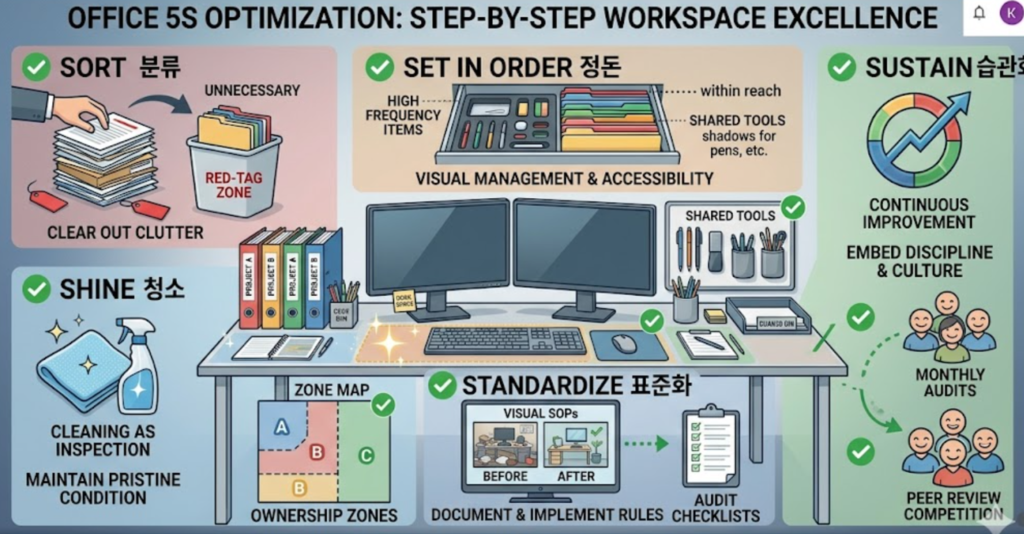
As a Lean Innovation specialist, I have led a comprehensive Office 5S Consulting Project aimed at optimizing an administrative workplace. Below is a detailed review of the case study, outlining the challenges faced, the step-by-step implementation process, and the measurable cultural shift achieved.
Office 5S: The Invisible Waste in Administrative Work
Before the intervention, the client’s office suffered from classic administrative bottlenecks. Employees spent an excessive amount of time looking for shared documents, office supplies were over-ordered yet frequently unavailable, and the physical environment lacked visual clarity.
The primary objective was not merely “cleaning up” the office, but establishing a high-performing, visual workplace where abnormalities could be spotted instantly.
The Office 5S Implementation Journey: Step-by-Step
1. Sort (Seiri): Decluttering the Foundation
The project began with an intensive sorting phase across desks, cabinets, and shared storage zones.
- The Red-Tag Campaign: Items were categorized into necessary and unnecessary. Broken equipment, outdated manuals, and duplicate stationary were red-tagged and either discarded or moved to a holding area.
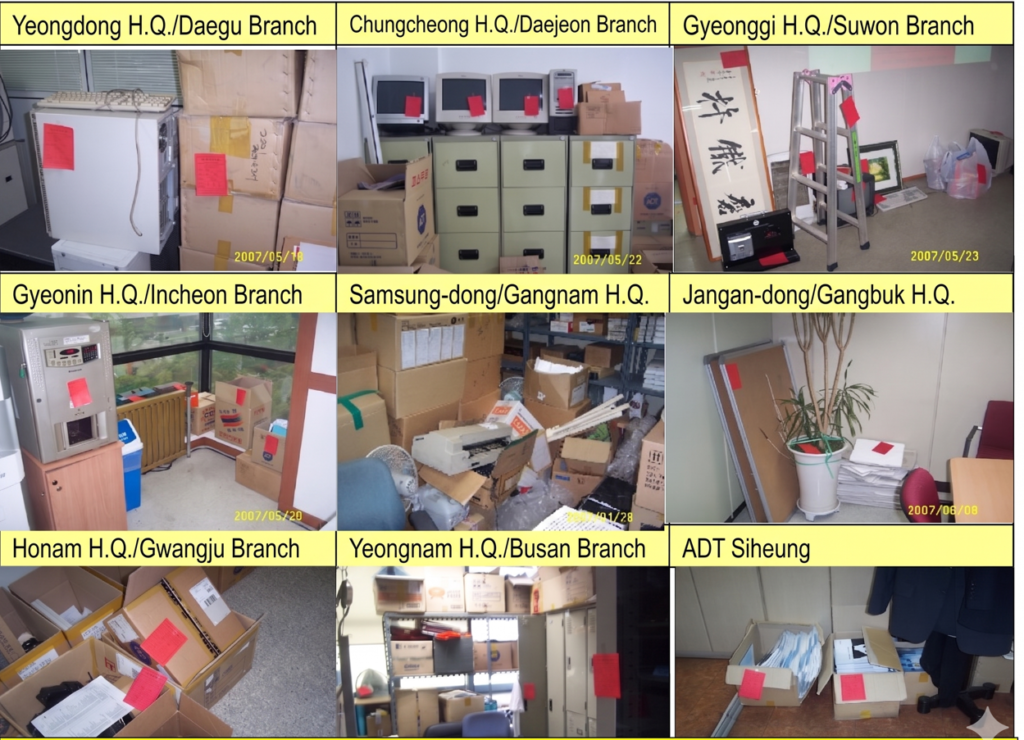
- Outcome: We reclaimed over 25% of cabinet space, significantly reducing the physical footprint required for storage.
2. Set in Order (Seiton): A Place for Everything
Once the clutter was removed, we focused on ergonomics and efficient workflow layout.
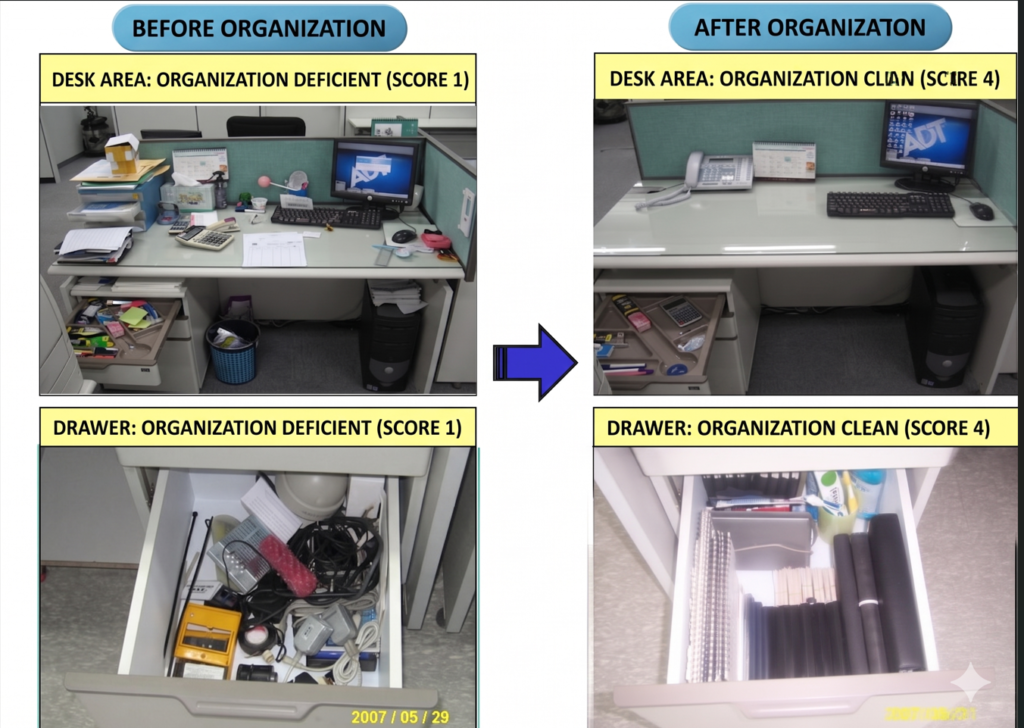
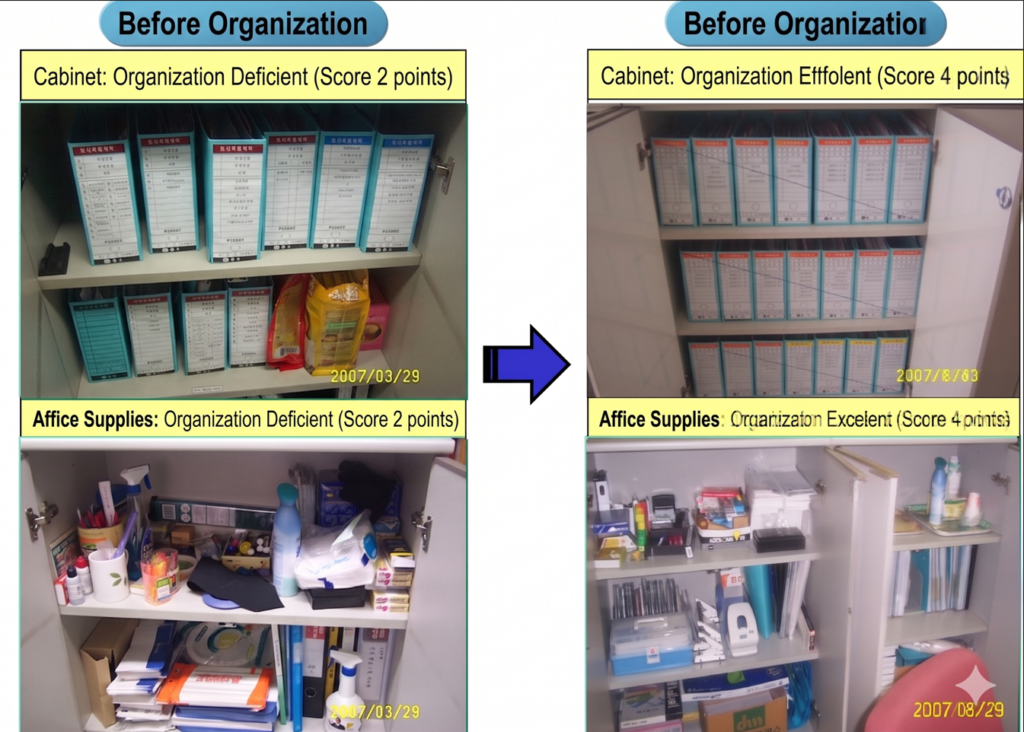
- Frequency-of-Use Rule: High-frequency items were placed within arm’s reach of workstations, while occasional reference materials were moved to centralized, labeled cabinets.
- Visual Management: We introduced shadow boards for shared utility areas, color-coded filing protocols, and clear boundary markers on desks and shelves.
3. Shine (Seiso): Cleaning as Inspection
A clean workspace is a safe and high-morale workspace.
- Ownership Mapping: The office was divided into specific zones, with distinct team accountability assigned to each. Cleaning was treated as an inspection process to detect wear, damage, or creeping clutter early.
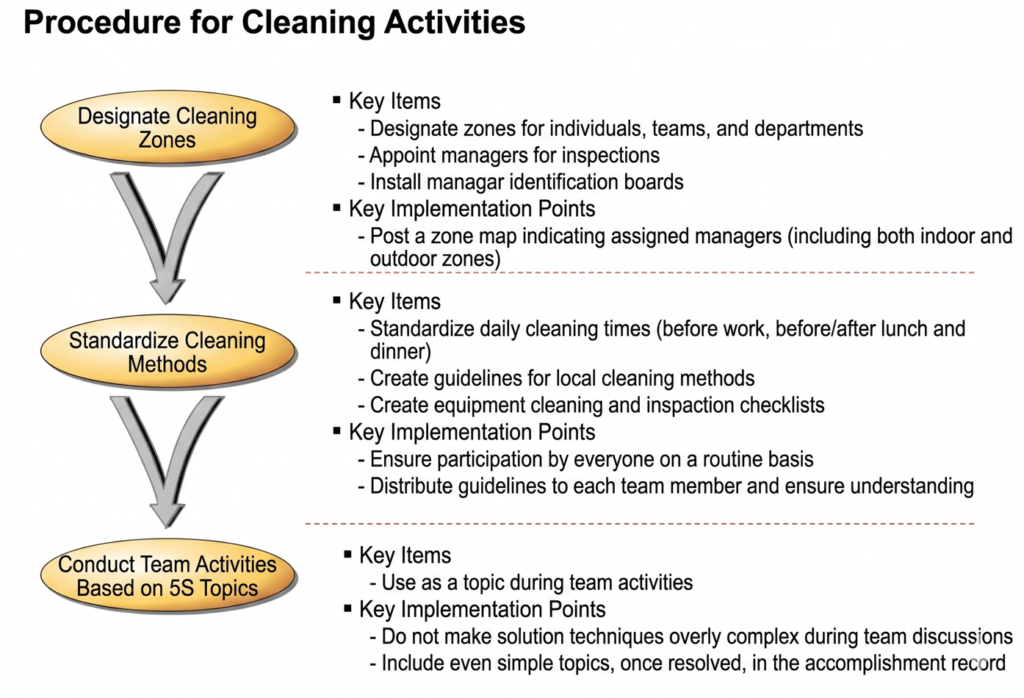
4. Standardize (Seiketsu): Creating the New Norm
To prevent the workplace from reverting to its old state, visual controls and clear rules were codified.
- Visual SOPs: One-page photo standards (“Before vs. After”) were posted near storage areas to define what a perfect “5S State” looks like.
5. Sustain (Shitsuke): Embedding the Lean Culture
The final, and most challenging, step was building long-term discipline.
- 5S Audits: We established a monthly auditing schedule using a simple scorecard. Teams conducted quick peer reviews, turning continuous improvement into a light, competitive routine.
Case Study Results & Takeaways
Key Impact Summary:
- Time Savings: Document and tool retrieval times dropped by an estimated 35%, boosting daily processing efficiency.
- Cost Reduction: Supply overhead dropped by eliminating duplicate ordering of hidden stationary.
- Employee Engagement: Workplace pride and morale saw a noticeable lift as teams operated in a crisp, distraction-free environment.
Ultimately, this consulting project proved that 5S is not a cleaning initiative; it is an optimization strategy. By transforming the physical space, we successfully transformed the operational mindset, proving that Lean principles are deeply vital to modern office productivity.
Are you ready to eliminate administrative waste in your organization? Let’s connect to discuss how a tailored Lean Office approach can elevate your team’s operational excellence.
Would you read more about Lean Methodology ?
7 Wastes : The Definitive Guide to Eliminating Non-Value-Adding Activities
Discover more from mfginsights.net
Subscribe to get the latest posts sent to your email.