When we look at how well a factory is doing, we usually check things like, “Are the machines running without stopping?”, “How fast can we make one product?”, or “Are the workers being efficient?” But the real, silent killer of productivity isn’t happening on the factory floor—it’s happening in boring, endless meetings up in the conference rooms. When managers and engineers are stuck in meetings all day, they lose the time they desperately need to be out on the shop floor. Because they aren’t out there, they can’t check on daily operations, catch mistakes before they turn into big problems, or make sure the workers stay safe.
This case study looks at how we completely overhauled our meetings between 2014 and 2022. By targetting useless meeting structures as a major form of Muda (waste), I have modified the following three meetings : the Daily Production Review, the Weekly HQ Global Calls, and the Monthly Departmental Performance Assessment. The outcome shifted our entire culture from a place of fear to a data-driven, agile, and Gemba-centric operation—successfully Eliminating Meeting Wastes.
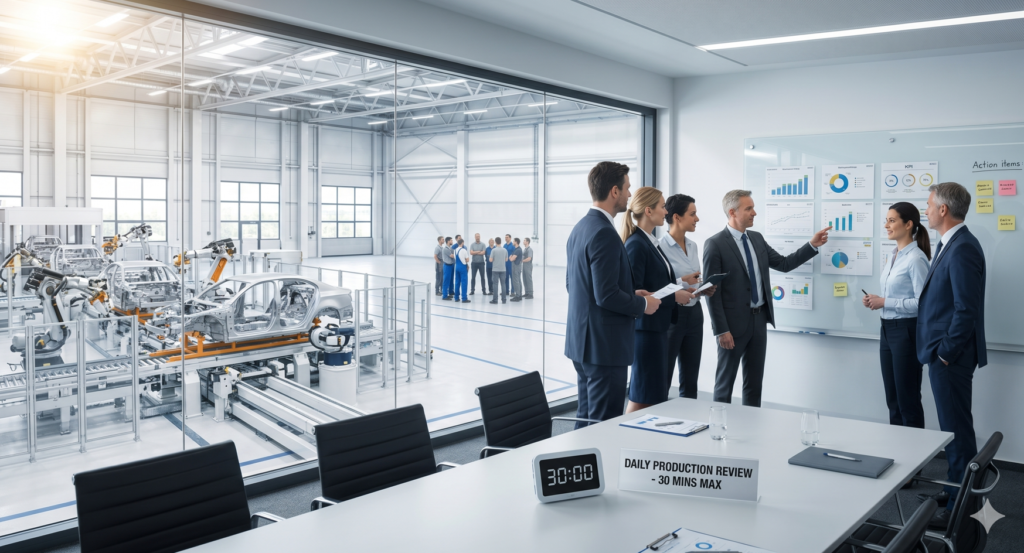
Eliminating Meeting Wastes
In the Lean world, we usually talk about wastes like “Waiting” or “Overprocessing” on the factory floor. But we often forget about the waste happening in office meetings.
Useless meetings actually create two big types of Lean waste:
- The Waste of Waiting: Decisions that need to be made quickly right on the shop floor get delayed because key managers are stuck in meetings.
- The Waste of Overprocessing: People spend hours making useless reports and over-explaining things just to protect themselves and get everyone to agree.
Basically, bad meetings slow everything down and create a ton of extra, useless work.
When I took over as the head of an overseas factory with 15 departments back in 2014, I noticed a huge waste of time in the office. The factory was stuck in a bad cycle: key managers were completely cut off from the actual workplace—the factory floor (Gemba)—because they inherited a system packed with way too many long, stressful meetings. Here is a breakdown of the problems we found with these wasteful meetings, and the strategies we used over the next nine years to get leaders out of the conference rooms and back to where the real value is made.
1. Fixing the Daily Production Review
The old schedule forced us into a really bad routine. We had to hold two different meetings every single day just to check on the day and night shifts. This meant managers had to sit through two long, exhausting meetings every day:
- The 2-Hour Morning Session: First thing in the morning, the previous Subsidiary Head summoned the Plant Manager alongside the department heads of all fifteen distinct business units to review the night shift’s outputs. This session consistently degenerated into a tedious two-hour corporate ritual.
- The 1-Hour Evening Session: At 5:00 PM daily, the exact same large group was assembled once more for a one-hour review of the day shift’s performance. Combined, these meetings consumed at least three critical hours every single day.
Here are the problems with the old meeting format, explained in simple terms:
- A Huge Waste of Everyone’s Time: The main goal of the meeting was just to check the production numbers for the 3 main manufacturing departments. However, managers from 12 other support departments (like HR, Finance, Quality, and IT) were forced to attend both meetings anyway. Twice a day, 12 highly paid managers sat there doing nothing, staring at their laptops, or falling asleep because the topic had nothing to do with them.
- Too Many People Attending Out of Fear: If the factory missed its daily targets, the meeting turned into a stressful blame game with a lot of yelling. To protect themselves from tough questions, panicked department heads started bringing their junior engineers and assistants along. A meeting that was supposed to have 16 people quickly grew to over 20 people, turning it into a crowded, expensive waste of time.
- A Bad Cycle that Delayed Action: On days when production numbers were bad, the morning meeting would drag on for over three hours. This meant that during the most critical hours of the morning—when managers needed to be on the floor checking safety and fixing machine issues—they were stuck in a conference room instead. Because they were trapped, urgent decisions were delayed, and problems on the floor couldn’t be fixed quickly.
The Intervention: Agile Morning Sync & Afternoon Standing Meeting
I realized that spending three hours a day in a meeting room was draining everyone’s energy and keeping us from fixing problems on the factory floor. So, I completely changed how we do things and split our daily reviews into two quick, efficient parts:
- The Morning Fix (Fewer People, 30-Minute Limit): For the morning meeting (checking the night shift), I cut the attendee list from over 20 people down to just 5 key leaders (Myself, the Plant Manager, and the 3 main Production Heads). We set a strict 30-minute time limit and stopped the meeting the second the timer went off. The 12 support departments were completely freed from this meeting, so they could focus on their actual work.
- The Evening Fix (A 30-Minute Standing Meeting): For the 5:00 PM meeting (checking the day shift), we still needed different departments to talk to each other. However, we changed the rules completely. We took away all the chairs, making everyone stand up, which naturally kept the meeting under 30 minutes.
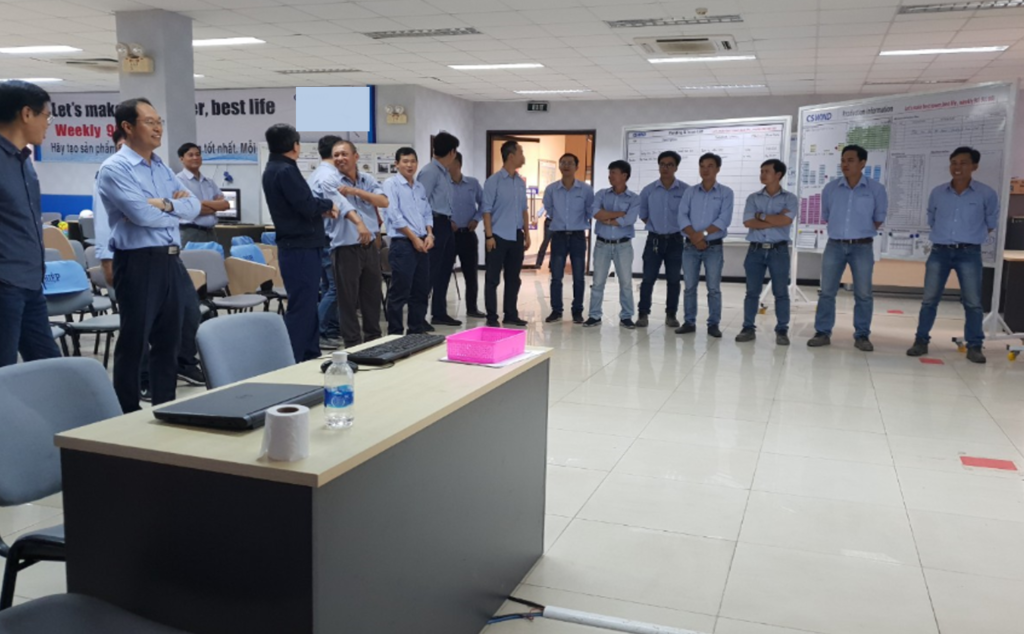
Thanks to these changes, the daily meeting time for our main production leaders dropped from 3 hours to just 1 hour. Even better, the 12 support teams went from 3 hours of meetings to only 30 minutes.
Freeing up these teams saved dozens of hours for our managers every single day. This gave everyone a lot more freedom to run their own departments and helped us make decisions and get things done a whole lot faster!
2. Stop Wasting Time on Global Calls That Have Nothing to Do With You
Operating a foreign subsidiary requires close alignment with corporate Headquarters (HQ) based in South Korea. The standard mechanism for this was a weekly global review hosted by the corporate Chief Operating Officer (COO) to receive updates from four distinct Asian manufacturing subsidiaries located in Malaysia, Taiwan, China, and Vietnam.
Scheduled every Wednesday at 10:00 AM Korean Time, the meeting set aside a 30-minute block per subsidiary. However, the architecture of the meeting was inherently flawed due to its synchronous, shared-room design. If a specific reporting subsidiary suffered from catastrophic output variances or material bottlenecks, their presentation inevitably dragged on. Consequently, the executive heads of the remaining three functional subsidiaries were forced to remain connected to the call for hours, absorbing information with zero relevance to their localized operations. Furthermore, during weeks when the corporate CEO was rumored to join, the COO implemented a mandatory “pre-rehearsal meeting” to personally grasp performance metrics, stretching total managerial downtime to over four consecutive hours.
The Intervention: Cutting Out the Wait with Separate 30-Minute Briefs
To stop this massive waste of time for regional leaders, I changed the system. Instead of making everyone sit through a giant, shared meeting, I set up a dedicated, independent 30-minute slot just for our branch
Under the revised structure, the Vietnam subsidiary established a locked, independent 30-minute direct reporting channel with the COO. The requirement to sit through the operational updates and performance critiques of Malaysia, Taiwan, or China was completely abolished. This optimization eliminated hours of non-value-added waiting time, allowing all regional leaders to highly appreciate the new format and reallocate precious time back into localized strategic planning.
3. Transforming the Monthly Performance Review into an Agile, Incentive-Driven Forum
The traditional Monthly Departmental Performance Meeting was an administrative marathon. Each of the 15 corporate departments prepared extensive slide packages to present their monthly summaries. At a standard allocation of 15 minutes per department, the session ran uninterrupted for over four hours. The sheer volume of retrospective data generated information fatigue, severely blunting the executive team’s capacity to identify critical trends or long-term strategic misalignments.
The Intervention: The 4-Minute Alarm, Peer-Voting, and Positive Gamification
I also cut down our monthly review from a painful four-hour lecture to a fast, focused 60-minute performance audit. To make this work, we put some strict rules in place:
- The 4-Minute Hard Stop: Every department head got exactly four minutes—2 minutes to show their data and 2 minutes for questions. We actually put a physical timer alarm in the room. The second the 4 minutes were up, the alarm went off, and the presenter had to stop talking to finish his presentation.
- Super Simple KPIs: At first, people didn’t think this would work, but the time limit forced everyone to fix their boring slideshows. Managers stopped adding useless details and pretty slide designs. Instead, they put their main performance numbers onto a single-page dashboard. Some great managers would literally show one chart and say, “Please look at the dashboard. All targets are 100% met. Any questions? If not, I’m done.” They finished in under 30 seconds!
At the same time, we completely changed how the meeting felt. To stop people from dreading these monthly reports, we turned successful months into a celebration. We played classical background music in the boardroom and brought in pizza and drinks to reward everyone for their hard work.
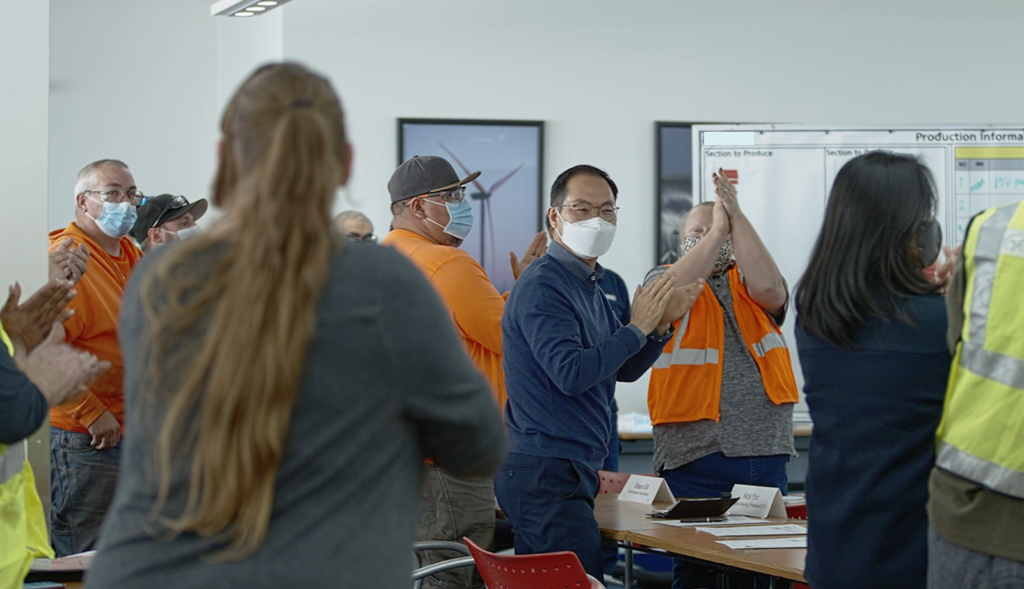
To motivate our leaders, we started a Peer Recognition Reward System across three of our global factories. At the end of every monthly meeting, all department heads voted anonymously for the top three managers. The winners were chosen based on two things: hitting all of their department’s KPIs or giving a clean, super clear presentation. The winners instantly got a cash prize( 200 RMB in China entity, 500,000 VND in Vietnam entity, and 100 USD in the USA entity). This local reward system completely changed the vibe, turning a meeting everyone used to hate into a fun, motivating game across all our sites!
4. Cultivating a Gemba-Centric Problem-Solving Culture
Eliminating Meeting Wastes and meeting room overhead was merely the structural prerequisite for the ultimate strategic goal: migrating organizational intelligence out of corporate offices and embedding it directly onto the production floor—the Gemba.
To support this cultural shift, I have revised the plant’s operational philosophy regarding risk management, Psychological Safety, and performance evaluation:
The ‘Early-Escalation’ Framework and Shop-Floor Brainstorming
If a machine broke down or a line stopped, we didn’t waste time on formal sit-down meetings. The engineers and line supervisors immediately went directly to the factory floor. They did their brainstorming and problem-solving right next to the machine, in real time.
Psychological Safety: No Blame for Early Warnings
We made a crystal-clear rule: if a manager brought up a problem early when it was still small, they faced absolutely zero blame or penalties. Instead, leadership stepped in to help them brainstorm and clear any roadblocks. But if a manager tried to hide a problem, letting it snowball into a major failure that stopped a line or caused a huge customer complaint, the consequences were swift and severe—including getting demoted.
Aggressive Stretched KPIs Balanced by Financial Incentives
We didn’t want the team getting comfortable with the new routine, so we set aggressive targets for the upcoming year. To keep everyone sharp and moving forward in this new streamlined system, I have pushed for bold goals during annual planning. Instead of playing it safe, every department was guided to set ambitious KPIs—aiming for at least a 30% jump compared to the previous year’s performance
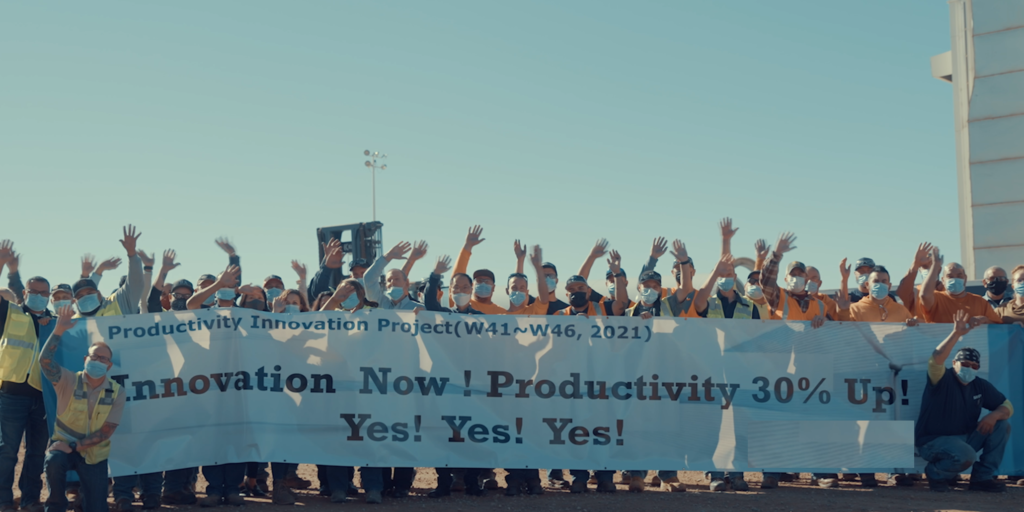
To balance the stress of these stretched targets, an aggressive meritocratic compensation model was introduced: managers who successfully hit these high-reaching benchmarks received up to a 10% increase in their base annual salary, doubling the plant’s historical average merit increase of 5%. This financial alignment ensured that lean operations translated directly into high-reaching personal advancement.
5. Quantifiable Strategic Outcomes and Cultural Transformation
The comprehensive overhaul of the factory’s communication infrastructure between 2014 and 2022 generated profound compounding benefits across the entire manufacturing ecosystem:
- Maximized Managerial Concentration on Value-Adding Work: Reclaiming hours previously lost to daily, weekly, and monthly meetings allowed department heads to focus entirely on their core competencies. Support heads focused heavily on preventative system improvements, while production leaders spent significantly more time on the shop floor, implementing immediate countermeasures against unexpected variances.
- Enhanced Plant Cohesion and Executive Accessibility: By spending less time reviewing retrospective reports inside conference rooms, I have been spending over 2 hours every day walking the production lines, interacting with line workers, and listening directly to operators’ suggestions. This high visibility broke down the historic barriers of fear and anxiety that frontline employees often felt toward foreign executive management, forging a highly cohesive corporate identity.
Advice for Leaders: The True Measure of Modern Lean Leadership
The journey of our overseas plant proves one thing: you can’t achieve true Lean manufacturing just by upgrading machines or fixing material flows. It requires relentlessly cutting out time-wasting habits at the management level. Meetings should never be used to show off authority, micromanage experts, or delay tough decisions.
By cutting meeting times, running independent reports, gamifying performance reviews, and building a culture where people speak up early, we turned our conference rooms into launchpads for fast action. For modern manufacturing leaders, the ultimate lesson is simple: Real value is created when you step out of the conference room, turn off the projector, and stand firmly on the Gemba.
For more insights on manufacturing excellence and strategic transformation, read more post below.
Factory Turnaround Strategy in Vietnam
A Factory Turnaround Case Study: Turning Deficit into Profit in China
3 Lessons the Flea Experiment Teaches Us About Success
Discover more from mfginsights.net
Subscribe to get the latest posts sent to your email.