It is very hard to fix a failing factory when it is losing money. For foreign companies in China’s competitive markets, even a tiny mistake can cause complete failure.
Based on my experience as a Plant Manager and General Manager, this case study shows how I resolved a severe operational crisis in 2014, which started from a broken incentive promise and turned into a full-scale strike. It also explains the structural turnaround and international negotiations I led to make a bleeding, 50-billion-won plant profitable again. Here is the case of Factory Turnaround.
Phase 1: How a Broken Promise Caused the Strike
By 2014, our manufacturing facility had successfully operated in China for nine consecutive years. However, the macroeconomic environment had drastically shifted. Local Chinese competitors, leveraging heavily subsidized low-cost cost structures, began undercutting our price models. Consequently, global clients shifted their purchase orders away from South Korean-managed branches toward cheaper local alternatives, plunging our operations into a compounding deficit.
To stimulate productivity on the shop floor and engineer a way out of the red, executive leadership designed an aggressive operational strategy: if an individual worker exceeded legacy output baselines by more than 30%, the firm guaranteed a performance incentive. On an individual basis, the incentive was modest—600 Yuan per operator. However, scaled across our entire frontline manufacturing workforce of 400 personnel, the cumulative financial commitment represented a substantial sum.
Up to this point, as the factory director, I had maintained an exceptional relationship based on mutual trust with our local operators. Every morning, I conducted Gemini-style floor walks, greeting operators individually in Mandarin, auditing their physical wellness, and addressing grievances directly on the line. The workforce was diligent, managed natively by Gong-Dan-Zhangs (local line supervisors who commanded immense respect among the regional community).
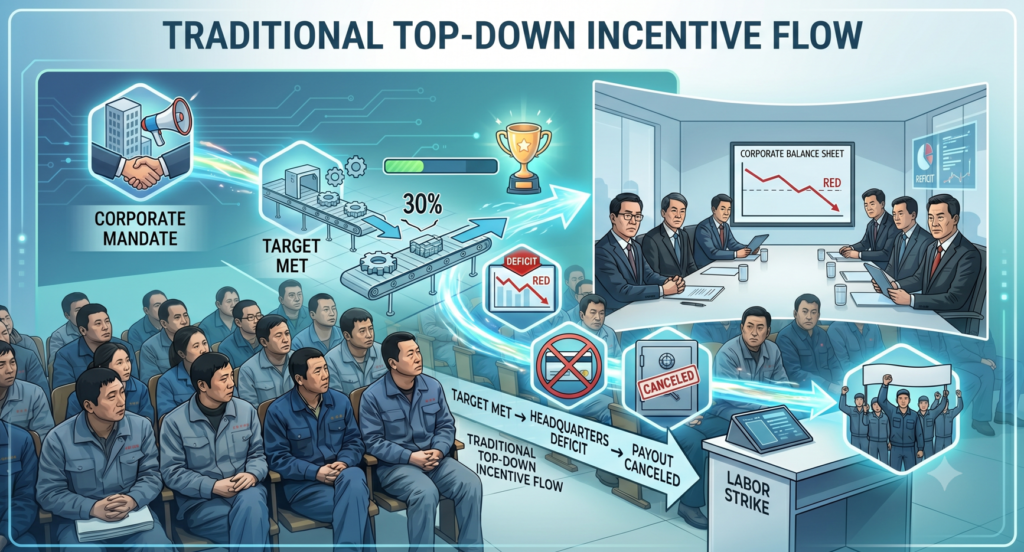
Motivated by the financial upside, the workforce rallied, optimized their cycle times, and successfully achieved the 30% stretch target. Yet, behind closed doors, a corporate deadlock was brewing. The South Korean headquarters, observing only the macro-level operational losses, was putting immense strategic pressure on our corporate legal representative during monthly reviews to shut down the Chinese branch entirely.
Trapped in a corner, the legal representative made the critical mistake of cancelling the incentive payout entirely. The blowback was immediate. The workforce rightfully declared that management had breached its contract, initiating a well-coordinated collective labor action.
The structural dynamics of their strike were highly sophisticated:
Passive Non-Cooperation: Workers reported to their respective workstations on time but refused to engage the machinery or initiate assembly lines.
Defensive Stonewalling: When expatriate managers questioned the labor halt, operators uniformly responded that no product would move until the performance bonuses were distributed.
Escalation Shielding: If frontline operators felt undue pressure or physical intimidation from Korean management, they immediately defaulted to their local supervisors for organizational protection.
Phase 2: Resolving the Standoff Through Radical Transparency
As factory director, I stepped onto the floor to de-escalate, begging the teams to resume work based on my personal track record with them while I negotiated with upper management. But the corporate deadlock remained unyielding: the legal representative maintained that without corporate clearance from headquarters, paying out the funds under an active deficit was financially impossible.
The crisis escalated dramatically on the third day when the striking workforce officially filed a grievance with the regional Labor Bureau and shifted their entire physical presence to the government headquarters. The local authority immediately summoned our corporate head to answer for the contractual breach. Paralyzed by organizational shame and intense stress, the legal representative refused to appear. Realizing that organizational abandonment would mean the permanent liquidation of the entity, I assumed corporate representation and drove to the government tribunal.
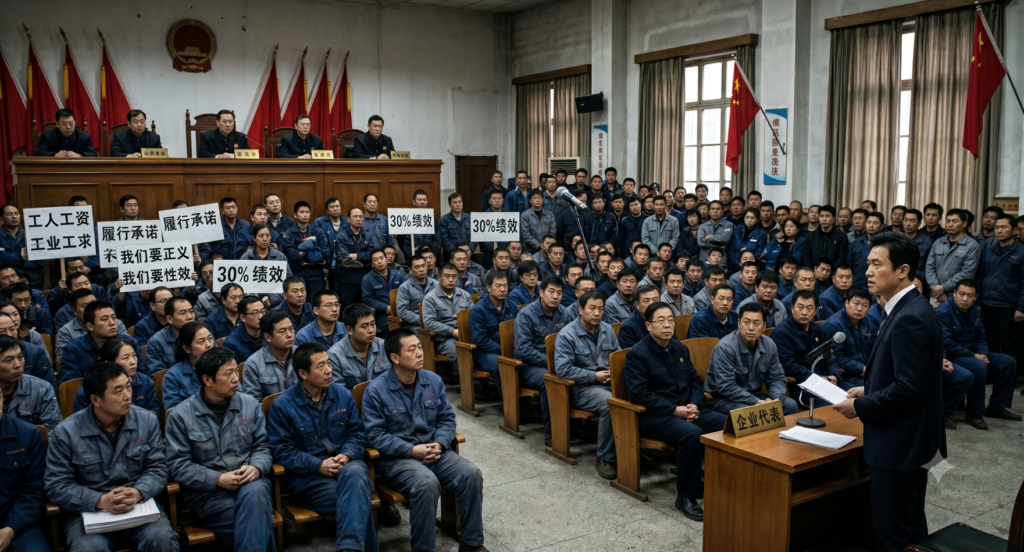
The scene inside the grand auditorium was formidable: over 200 angry line workers filled the hall, with Labor Bureau officials positioned like high-court judges on the elevated bench. After reviewing the labor agreements, the Bureau’s chief secretary ruled unambiguously: the workers’ demands were contractually valid, and the firm was legally obligated to execute the payout.
Knowing a direct cash payout was impossible at that time, I made a raw, emotional plea directly to the local supervisors and the assembled workforce. I bypassed the corporate rhetoric and laid out the cold financial facts. I explained that the plant was on the verge of permanent closure by headquarters. I asked for a 6-month grace period, making a binding personal vow that if they returned to the production lines to help achieve operational stability, I would guarantee the full distribution of their accrued incentives within half a year out of our restored cash flows.
Because of the daily relational equity I had built on the floor, the workforce accepted the compromise. They signed the agreement, ended the strike, and marched back to the factory.
In the wake of this cultural breakdown, the previous legal representative was reassigned to lead another entity, and I was officially appointed as the new General Manager (Legal Representative) to steer the entity out of near-bankruptcy.
Phase 3: The Lean Turnaround — Executing Heavy Structural Restructuring
Taking office as General Manager, my immediate challenge was to initiate a rigorous factory turnaround to engineer enough cash flow to honor the 6-month labor debt while turning the operational deficit into a surplus. This required a ruthless, multi-pronged application of Lean organizational design.
1. Downsizing of Korean Expatriate Overhead
The most glaring financial bleed sat at the top of the organizational chart. The plant was carrying 8 South Korean expatriates, each costing the local branch between 150 million to 250 million KRW annually in relocation packages, housing allowances, and base salaries. Within the first 30 days of taking command, I reassigned three expatriates back to other regional entities. Within 6 months, I minimized the expat footprint down to just two critical personnel, slashing overhead costs dramatically. Since then only 2 Korean remains as expatriates, a General Manager and a financial officer. This would be a typical example of glocallization(Global + Locallization) in China.
2. Right-Sizing the Local White-Collar Layer
If Korean leadership was making sacrifices, local management had to follow. The administrative office was bloated with 78 personnel. I launched a structured voluntary separation program backed by competitive severance packages, right-sizing the white-collar staff down to 50 employees—a net 40% reduction in headcount.
To prevent operational paralysis or employee burnout among the remaining 50 staff members, I executed a transparent cross-training matrix to absorb the legacy workflows. Concurrently, I repurposed a fraction of the recaptured payroll savings to instantly boost the remaining staff’s salaries by 10%. This structural alignment eliminated office resentment and boosted administrative productivity.
3. Bottom-Up Kaizen Deployment
We activated robust continuous improvement (Kaizen) channels on the shop floor. Frontline operators, now secure in their deferred incentive timeline, submitted hundreds of micro-efficiency ideas targeting consumable tool conservation, energy optimization, and scrap reduction.
Phase 4: High-Stakes Negotiation and Defeating Unethical Purchasing
While our internal cost-cutting measures successfully lowered our Break-Even Point (BEP), defensive scaling alone could not rescue the plant. True turnaround required secure, high-margin sales volume. Historically, our corporate sales pipeline was controlled exclusively by our parent sales office in South Korea. However, our corporate sales team had grown defeatist, repeatedly claiming that winning purchase orders in mainland China was impossible due to the local price war.
The critical turning point came when a future German client was looking for new suppliers in China, prompting an emergency commercial meeting at their regional procurement center in Shanghai. The corporate account manager called me in a panic, stating that our chief Chinese rival (Company T) was cutting prices so aggressively that entering a standard bid would mean committing to a structurally unprofitable project.
Recognizing that this specific contract held the exact volume required to push our factory past its BEP threshold, I intervened. I packed my bags and accompanied the sales representative to Shanghai to lead the negotiation face-to-face.
During the initial meeting, we encountered the client’s newly appointed procurement director—an ambitious expat buyer determined to hit his own aggressive cost-reduction targets. He flatly demanded that we match the rock-bottom pricing allegedly offered by our local competitors. The meeting concluded after an hour without an agreement. Accepting his terms meant locking our factory into multi-year financial losses, while walking away meant failing to meet our BEP metrics.
As I walked out of the meeting room into the lobby, I noticed the sales director of Company T waiting for his turn to meet the exact same buyer. Instead of leaving the premises, I made a calculated strategic decision: I waited outside the facility entrance for over an hour until Company T’s representative finished his session. When he emerged with an exhausted expression, I approached him and invited him to a nearby café for an open conversation.
What followed was a masterclass in game theory and supply chain transparency. I bypassed traditional corporate secrecy and laid my cards on the table. I asked him how his firm could possibly maintain positive margins under the buyer’s current target price.
The rival director looked surprised and admitted that his firm was also facing severe losses. He then revealed the buyer’s unethical negotiation tactic: the procurement director had been manipulating both of our firms through a classic “whipsaw” strategy. The buyer had taken our initial quote, told Company T that we were 10% cheaper to force them down, and then turned around to apply the exact same pressure to us. This toxic cycle had been repeated three distinct times, artificially driving the market price below basic raw material costs.
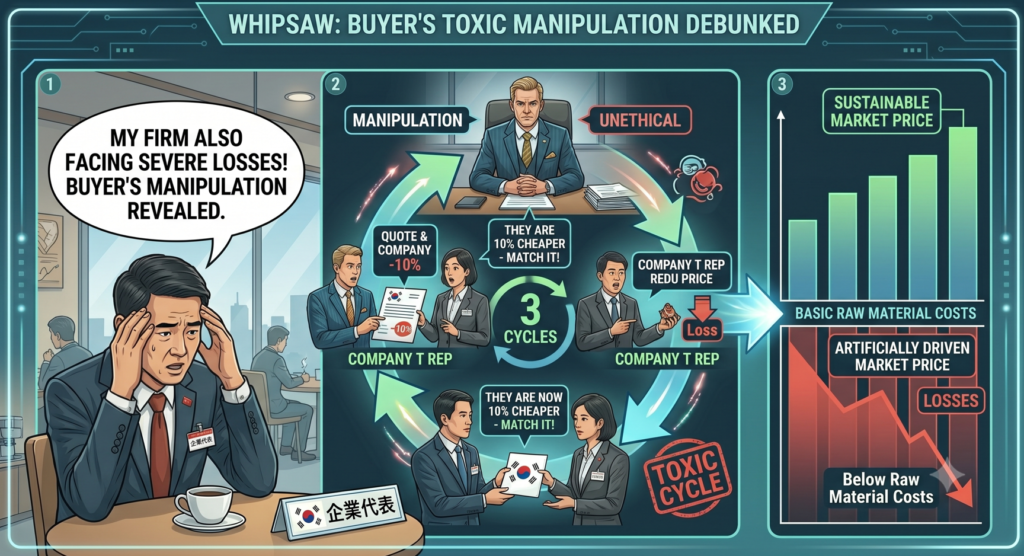
Right there in the café, we established a firm bilateral agreement. We agreed to stop falling for the buyer’s deceptive tactics. We calculated a sustainable floor price that sat exactly 10% above our respective break-even points, pledging that neither firm would bid a single Cent below that baseline.
Ten days later, realizing that his artificial price war had collapsed against our unified front, the procurement director yielded. Unable to risk a total supply chain failure, he split the contract evenly, awarding a 50% volume share to Company T and a 50% volume share to our facility—at our exact sustainable target price. A good news was that the procurement director of the new customer was elliminated after his staying for 8 months in Shanghai office because of his unreasonable and strange behaviors.
What This Crisis Taught Me
Thanks to the profitable Shanghai contract and strict cost-cutting, our factory finally turned a profit. Exactly six months after the labor strike, I stood before all 400 local operators and paid out every single Yuan of their promised bonuses in full.
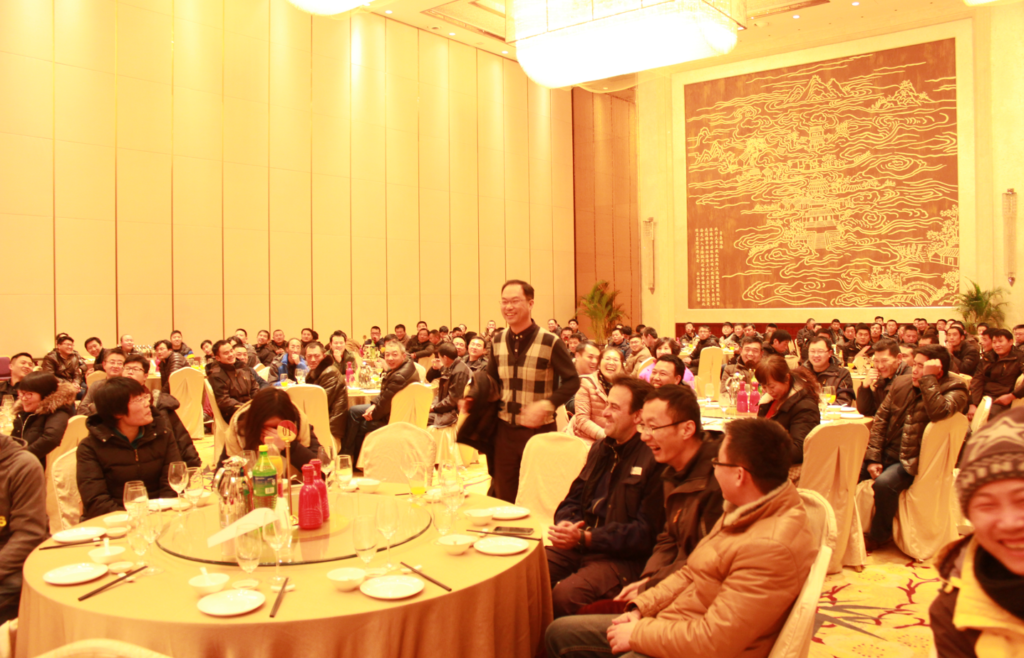
Our operations achieved long-term stability, and the plant continues to run successfully to this day. For international managers navigating complex industrial environments, this turnaround highlights three essential principles:
- Trust Is Your Real Capital:
When a crisis hits, administrative authority alone will not keep a facility running. The daily personal trust you build with frontline operators is what saves an organization when structural systems break down.
2. Transparency Over Cover-ups:
During a deep financial crisis, hiding the truth from your employees or local officials completely ruins your long-term trust. Sharing the honest financial reality can transform an angry workforce into reliable partners.
3. Defending Fair Business Standards:
When operating under intense market pressures, destructive competition only benefits reckless buyers at the expense of industry stability. Standing firm on sustainable operational standards protects both the business and the integrity of the market.
This case serves as a definitive blueprint for any leader driving a factory turnaround under pressure.
For more insights on manufacturing excellence and strategic transformation, read more post below.
Factory Turnaround Strategy in Vietnam
3 Proven Habits of High-Performing Leaders
3 Lessons the Flea Experiment Teaches Us About Success
Discover more from mfginsights.net
Subscribe to get the latest posts sent to your email.