To make a world-class manufacturing company, the physical layout of a production facility is a key element to improve efficiency. A poorly designed layout keep making a lot of wastes, introducing silent wastes such as excessive material handling and prolonged transit times. Conversely, a layout grounded in Lean principles harmonizes the relationship between operators, machinery, and material flow, turning the shop floor into a strategic competitive advantage.
This article examines a successful Factory Layout Optimization focused on spatial consolidation, visual management, and severe waste reduction. By systematically restructuring the facility’s physical footprint, the operation successfully unlocked new levels of labor efficiency and achieved a short delivery route.
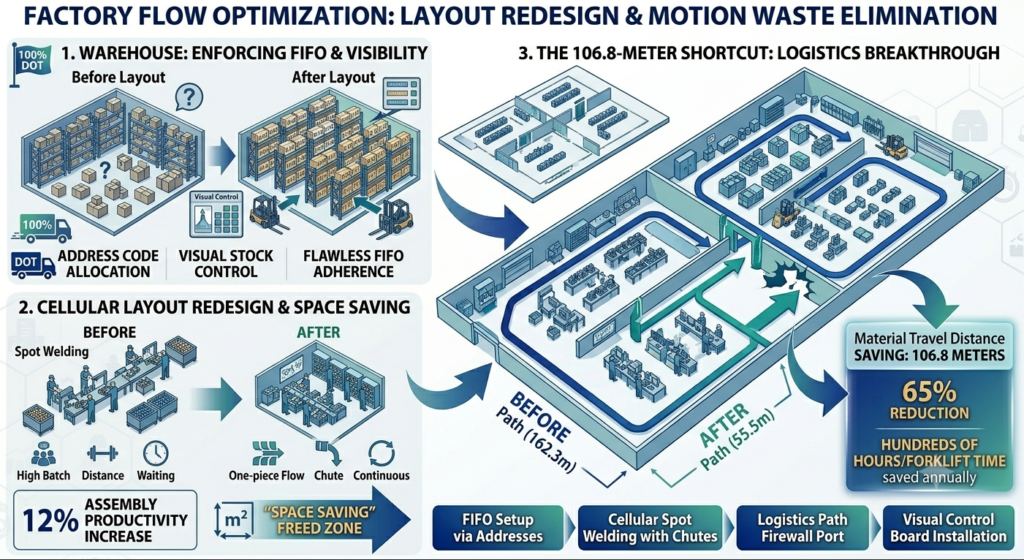
1. Transforming the Warehouse: Enforcing FIFO and Visibility
The first phase of the layout overhaul targeted the Finished Goods Warehouse. Over time, unguided expansion had turned the storage area into a highly disorganized zone characterized by high search times and unpredictable material handling.
Eliminating Hidden Logistical Wastes
The initial warehouse setup suffered from three major operational drains:
- Difficulty in following First-In, First-Out (FIFO) protocols, risking product obsolescence.
- Excessive motion and time wasted by material handlers searching for specific batches.
- Severe transportation waste caused by forklifts backtracking through cluttered aisles.
To resolve these inefficiencies, the industrial engineering team executed an aggressive physical reorganization:
- Flow Optimization: The warehouse footprint was restructured into clear, dedicated rows to ensure picking accessibility.
- Location Number Allocation: Every shelf, rack, and lane was mapped with a standardized visual address code, charting absolute paths for put-away and picking routes.
- Visual Stock Control Boards: Visual management panels were mounted at key intersections, providing real-time visibility into exact stock levels without requiring manual system audits.
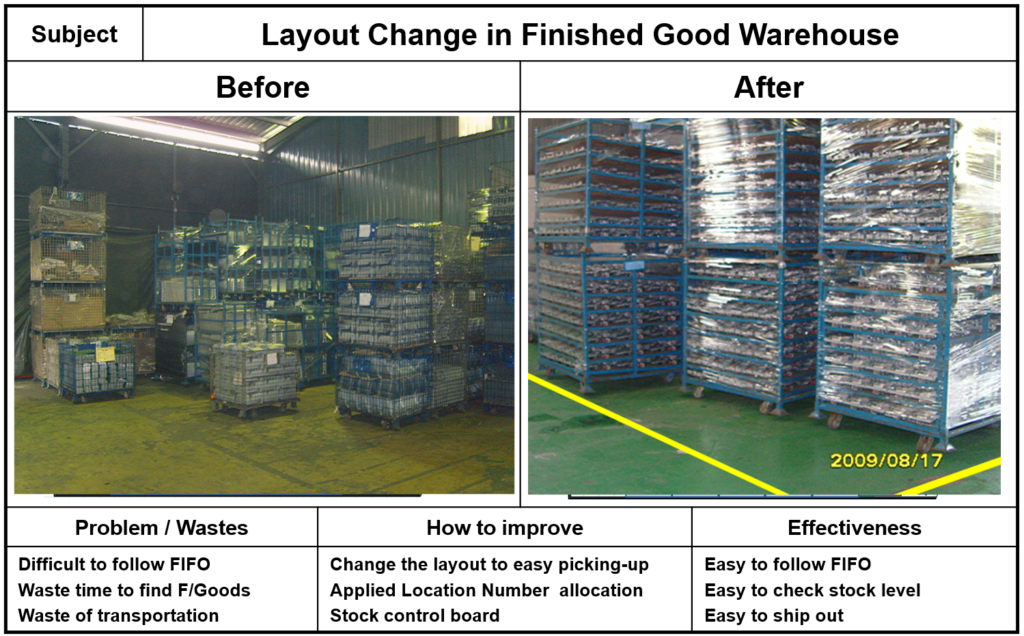
The Outcome of Factory Layout Optimization
The transformation was made quickly. By establishing clear physical addresses, the facility achieved good FIFO adherence, made inventory auditing effortless, and dramatically reduced truck loading times. This warehouse optimization was a primary driver in elevating the plant’s Delivery On Time (DOT) performance to a perfect 100%.
2. Cellular Layout Redesign: Saving Space and Human Motion
Beyond the warehouse, the team turned its attention to the core processing floor, executing major layout changes focused on space optimization and operator motion waste elimination.
Restructuring the Spot Welding Lines
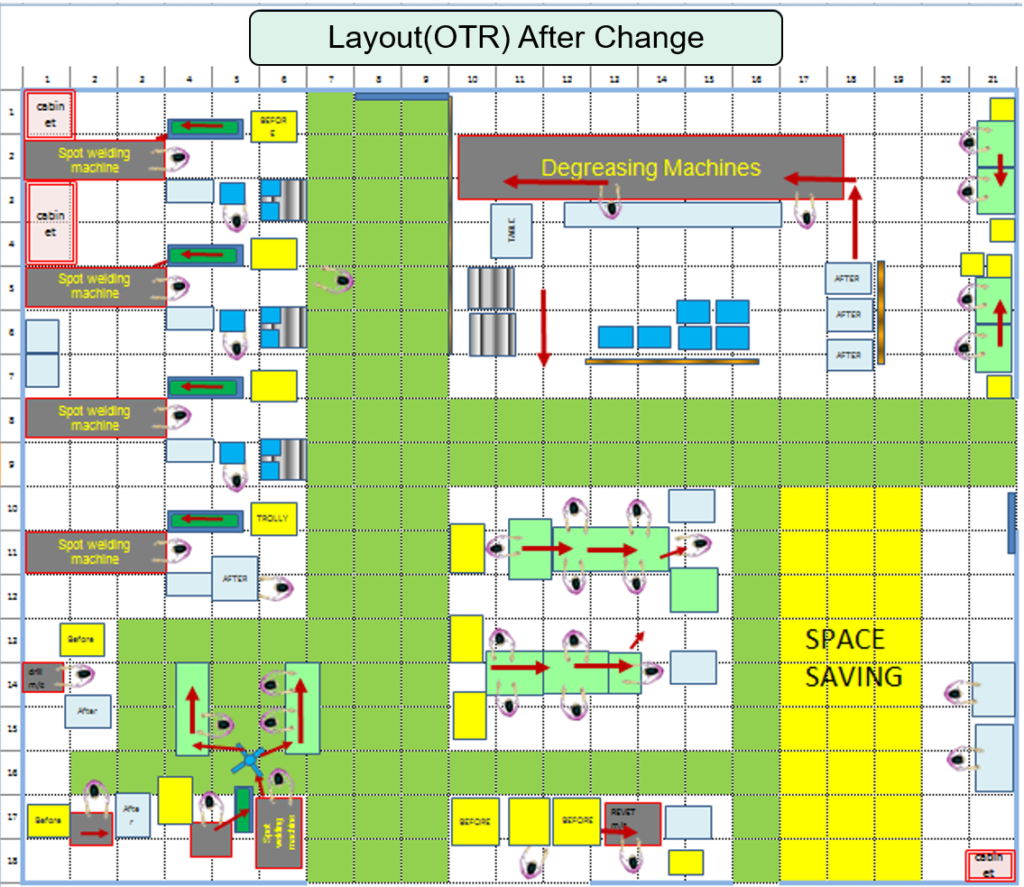
Historically, the production floor utilized segmented, standalone islands for processing components. In the Spot Welding lines, operators worked in fragmented areas, forcing high batch accumulation, long transit distances between sub-assemblies, and heavy forklift dependence.
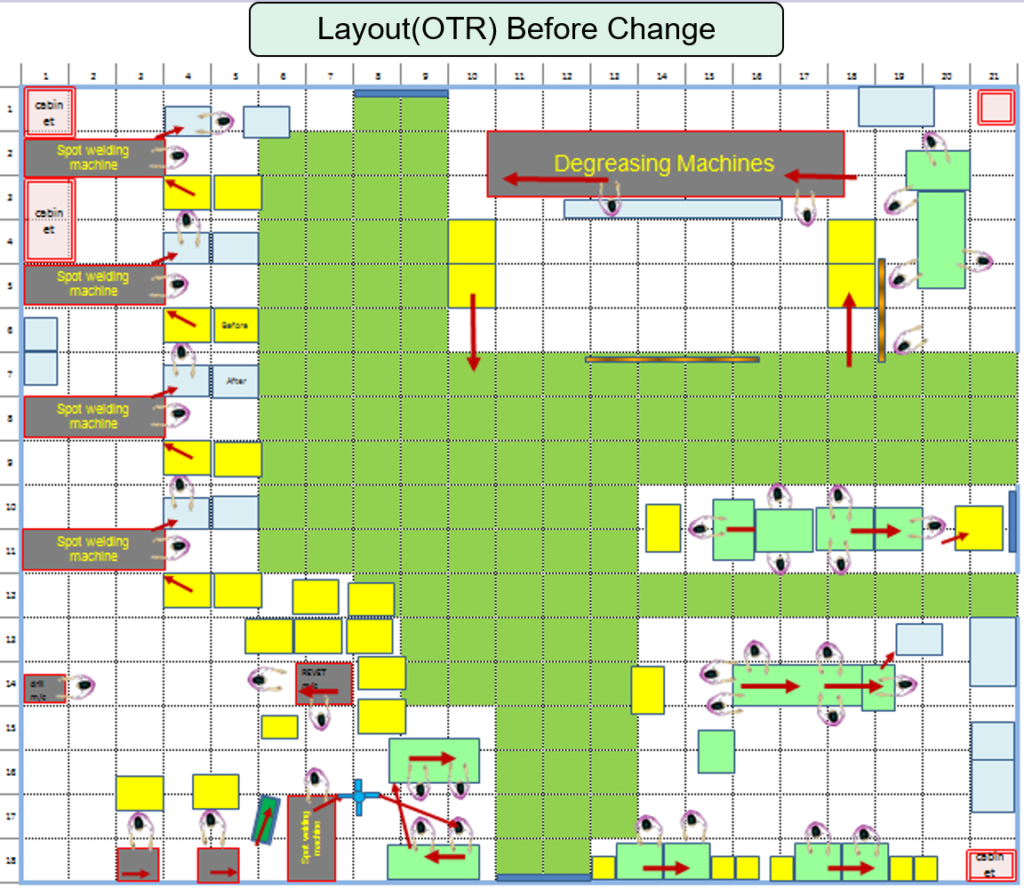
The team executed a comprehensive Cellular Layout Redesign: Factory Layout Optimization
- Space Saving : By shifting machinery closer together and eliminating dead zones between work cells, a massive pocket of “Space Saving” was freed up on the right side of the production floor, optimizing square-meter utilization.
- Gravity-Fed Chute Systems: To completely eliminate material transit delays between sequential welding stages, gravity-fed chutes were implemented directly between stations. This enabled single-piece flow production, where a completed part from one operator slid immediately into the reach of the next.
- Ergonomic Efficiency: Operator motion wastes were aggressively removed. Personnel no longer had to walk, lift heavy bins, or wait for automated material transfers; parts moved smoothly along a continuous line.
This process compression removed aisle obstructions, cleared forklift paths, and drove an immediate 12% increase in localized assembly productivity while allowing instant quality feedback between operators.
3. The 107-Meter Shortcut: Logistics Optimization
One of the most profound examples of motion waste reduction occurred in the logistics loop transporting raw materials (wire supplies) from the primary warehouse to the cutting line.
Factory Layout Optimization
- Before (The Long Loop): The historical pathway required material handlers to travel an incredibly long, circuitous route weaving all the way around the plant perimeter, totaling 162 meters per supply run.
- After (The Strategic Breakthrough): Industrial engineers identified a structural optimization opportunity. By physically cutting a new, dedicated transit port through the separating wall between the warehouse and the cutting production line, the path was compressed down to just 55 meters.
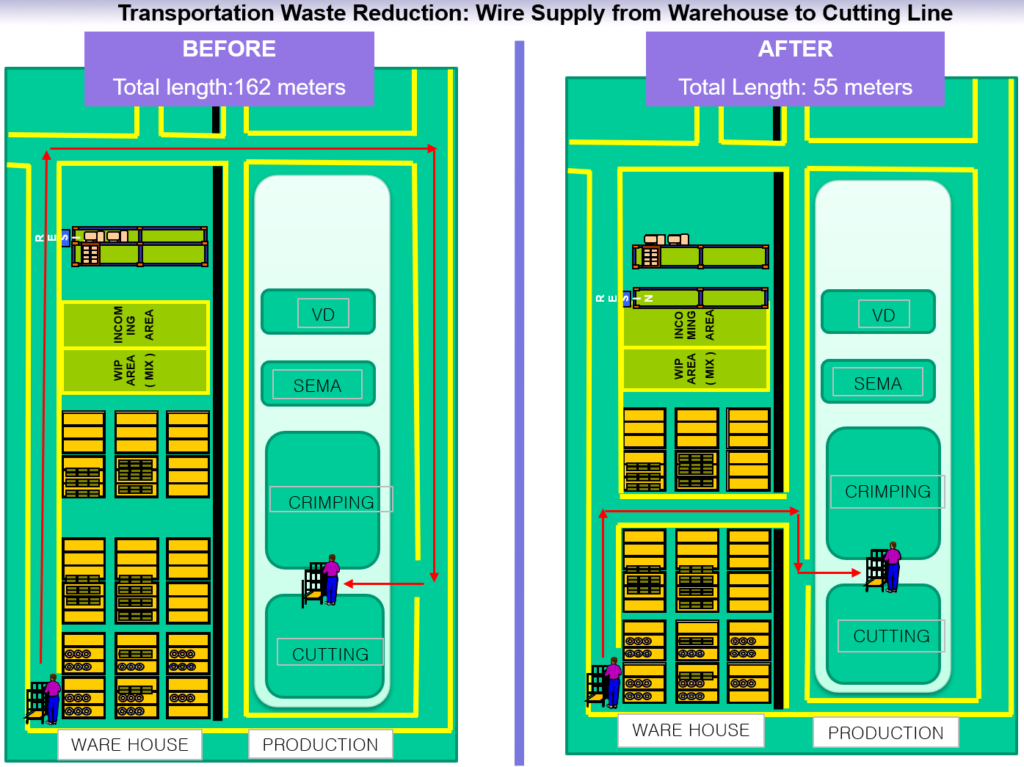
This data-driven structural adjustment eliminated 107 meters of travel distance per single trip. Multiplied across dozens of daily production runs, this modification freed up hundreds of hours of material handling time, eliminated floor congestion, and created a highly responsive replenishment cycle.
4. Advice for Manufacturing Leaders
The core takeaway of this factory layout initiative is clear: true plant efficiency is not merely about buying faster machinery; it is about optimizing the space and lines between those machines. By compressing a 162-meter transport path to 55 meters, embedding single-piece flow chutes into assembly cells, and utilizing clear visual locations, the facility transformed its cost structure. For manufacturing executives aiming for global businese, a disciplined layout reset is often the highest-ROI investment you can make on your production floor.
“Hungry for more? Check out these related posts.”
Crushing Transportation Waste: Strategic Layout Innovation
SMED Guide: How to Slash Die Change Time by 67%
Discover more from mfginsights.net
Subscribe to get the latest posts sent to your email.