Introduction: When Quality Crises Strike
In heavy manufacturing, a customer claim is one of the most high-stress scenarios a leadership team can face. This is especially true when the product in question is a mega-structure like a wind tower, where any post-delivery defect demands exorbitant field repair costs. When a client reports rust on a delivered product, the natural instinct of the supply chain is to point fingers.
However, in a Lean and Six Sigma framework, we do not rely on intuition, emotions, or finger-pointing. We rely strictly on Data-Driven Problem Solving and Root Cause Analysis.
![[Case Study] The Power of Data in Root Cause Analysis: How We Successfully Settled 1 Massive Paint Defect Claim](https://mfginsights.net/wp-content/uploads/2026/05/root-1-1024x607.png)
This case study reviews a major quality crisis from June 2017 involving severe paint peeling and blistering on delivered wind towers. It demonstrates how rigorous technical analysis successfully shifted 80% of the financial liability to the paint supplier, and highlights why flawless in-process quality control (IPQC) during production is a manufacturer’s ultimate shield.
1. The Context & The Blistering Crisis (Statement of Context)
In mid-2017, our wind tower manufacturing facility faced a critical quality claim from a key global client. Multiple wind towers that had already been fabricated, painted, and shipped to the destination site began exhibiting severe surface abnormalities.
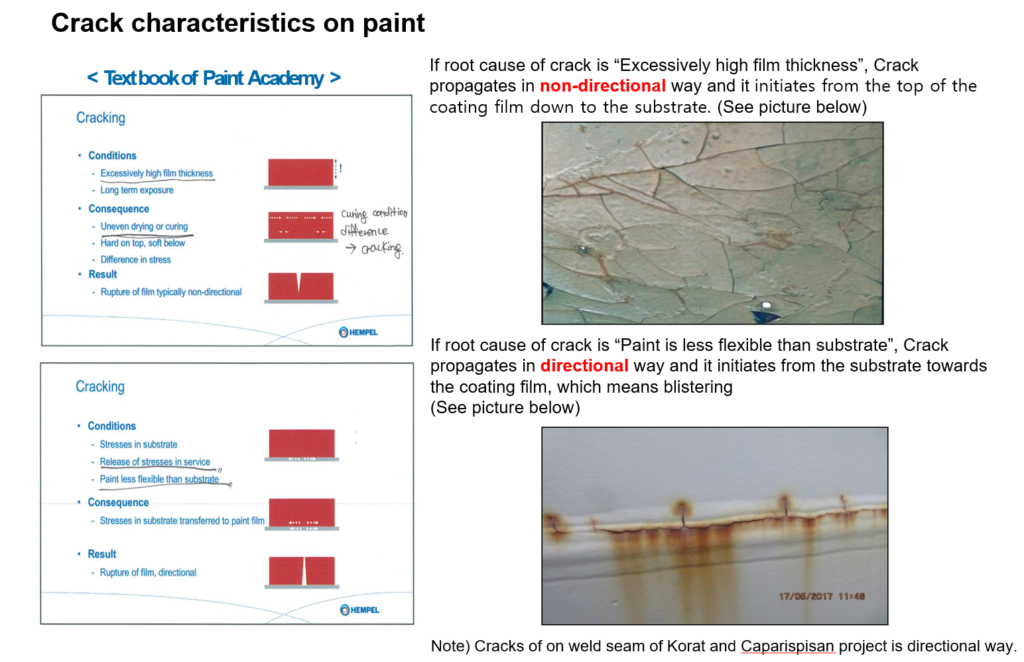
Upon field inspection, the tower surfaces showed widespread blistering, cracking, and premature rust formation. In the wind energy sector, coating integrity is paramount; these towers are engineered to withstand extreme offshore or onshore environmental stressors for over 20 to 25 years.
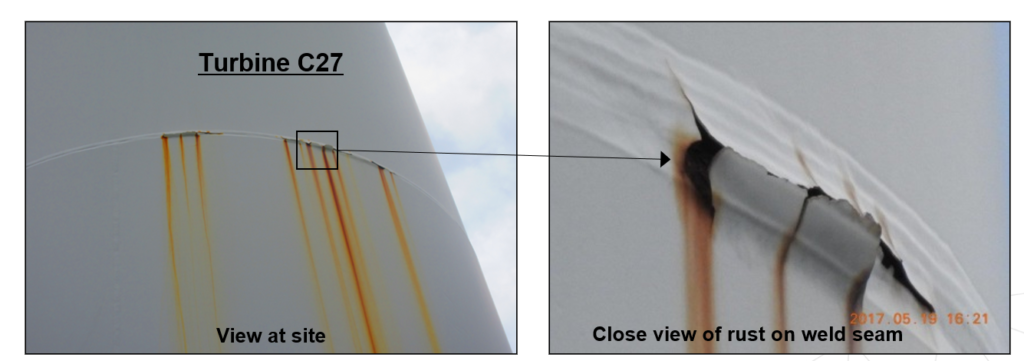
Because the towers were already delivered, executing a field repair (sandblasting, re-priming, and top-coating on-site) meant facing astronomical repair bills, potential liquidated damages, and a severe threat to our brand reputation.
2. The Challenge: Sifting Through the Variables
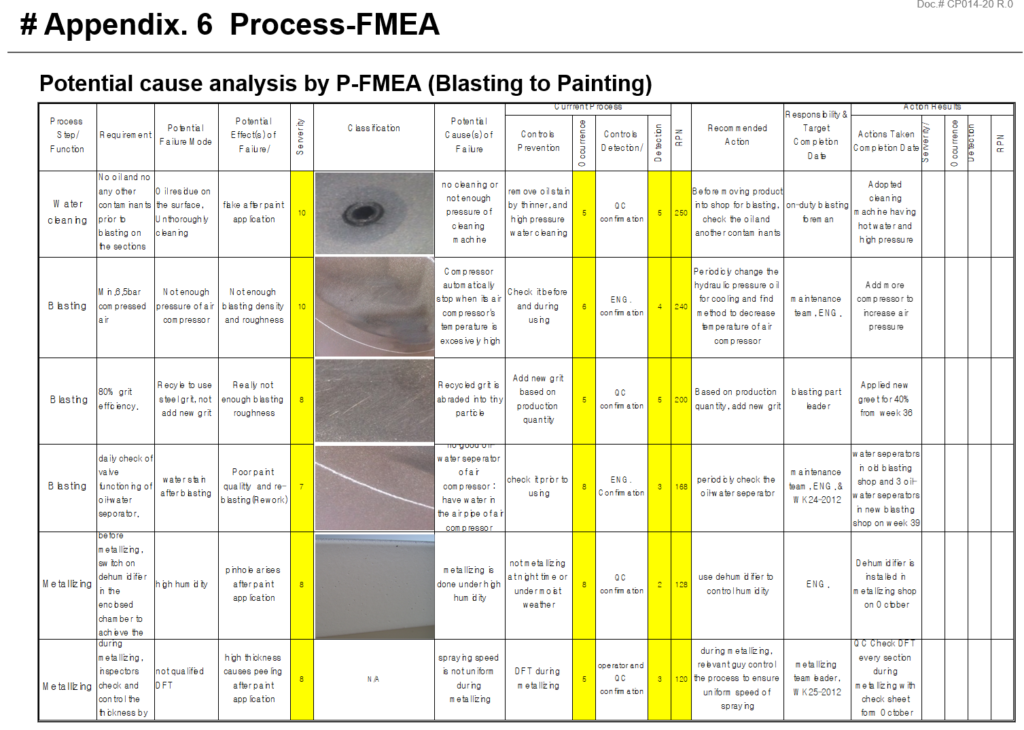
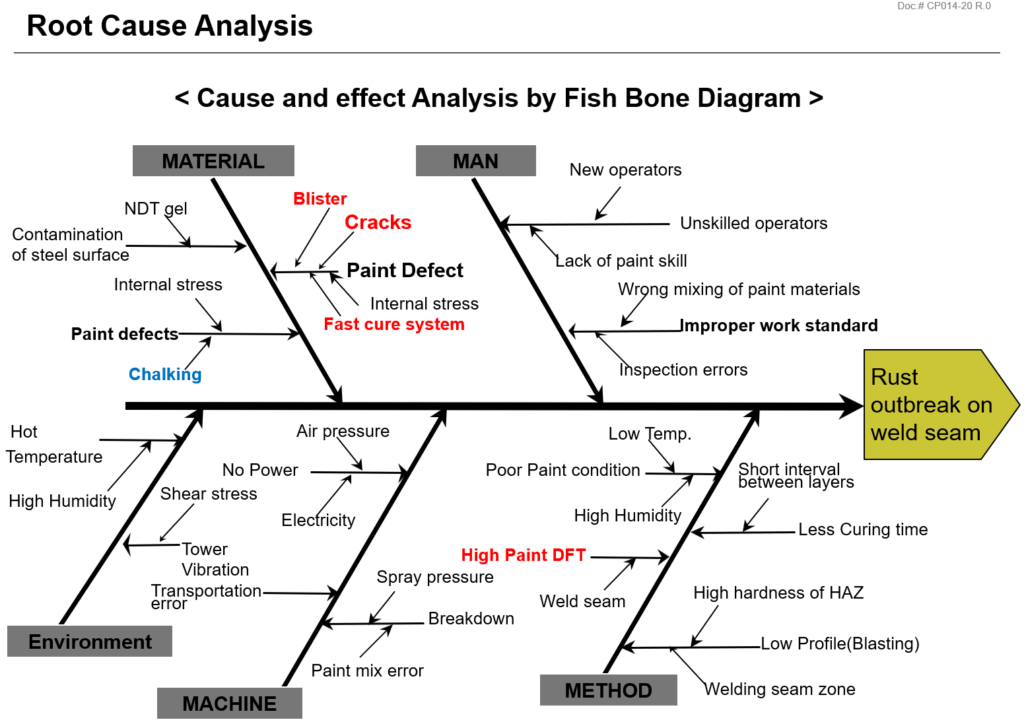
The initial challenge was determining accountability. The paint supplier immediately claimed that the rust was caused by our factory’s application errors—arguing that our painters either failed to achieve the specified surface roughness during grit blasting, mismanaged the wet film thickness (WFT), or allowed flash rusting due to improper humidity control before painting.
As the manufacturer, we were trapped in a classic multi-variable riddle. The failure could have been triggered by:
- The Application Environment: Ambient temperature, relative humidity, or steel substrate temperature during coating.
- The Mechanical Preparation: Improper salt removal or inadequate anchor profile from the blasting process.
- The Paint Material itself: Chemical formulation flaws, incorrect mixing ratios, or defective batches shipped by the chemical vendor.
To protect our company from unfair financial devastation, we needed to move away from theoretical debates. We had to launch a forensic, data-centric root cause analysis to uncover the absolute truth.
3. The Forensic Action: Data-Driven Root Cause Analysis (Action)
We deployed a specialized cross-functional Quality Engineering team to systematically audit both our historical production logs and the chemical properties of the failed coating layers.
Step 1: Verification of In-Process Quality Control (IPQC) Logs
Our first line of defense was our robust internal process tracing. We pulled the digital manufacturing execution data for the exact serial numbers affected by the rust claim.
- Blasting Parameters: The data proved that surface profile depths were consistently within the required specification.
- Environmental Controls: The continuous tracking logs proved that the relative humidity inside the painting booths was strictly maintained below 85%, and the steel temperature was consistently kept at least 3 above the dew point.
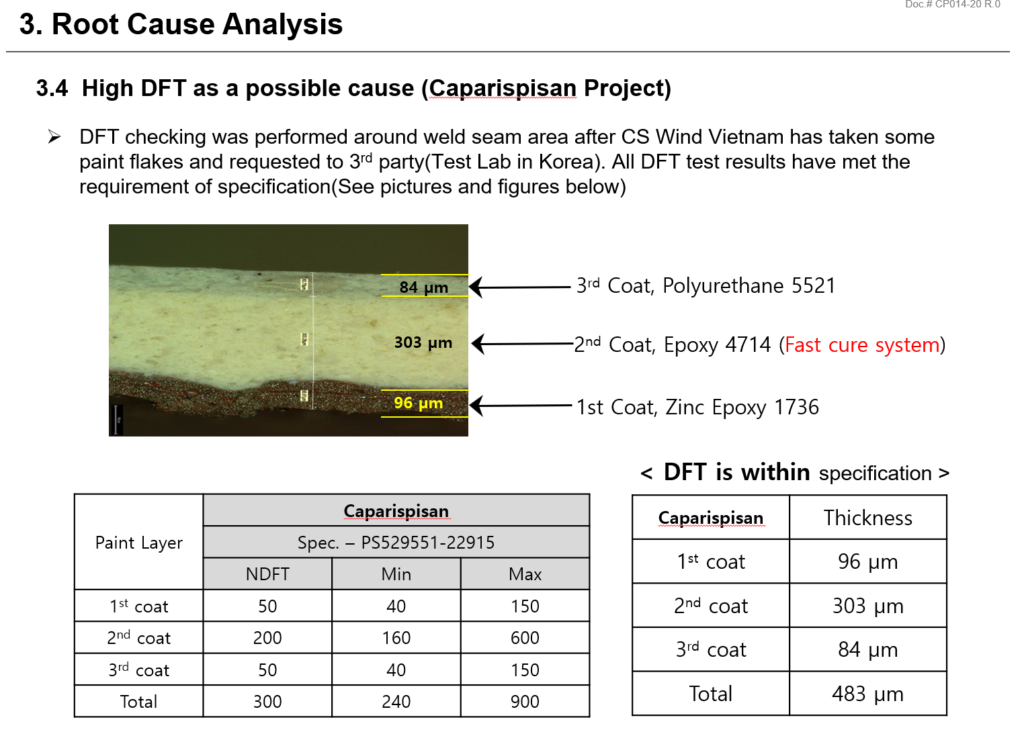
- Dry Film Thickness (DFT): Electronic gauge metrics verified that the primer, intermediate, and top coats met the client’s precise micrometer specifications.
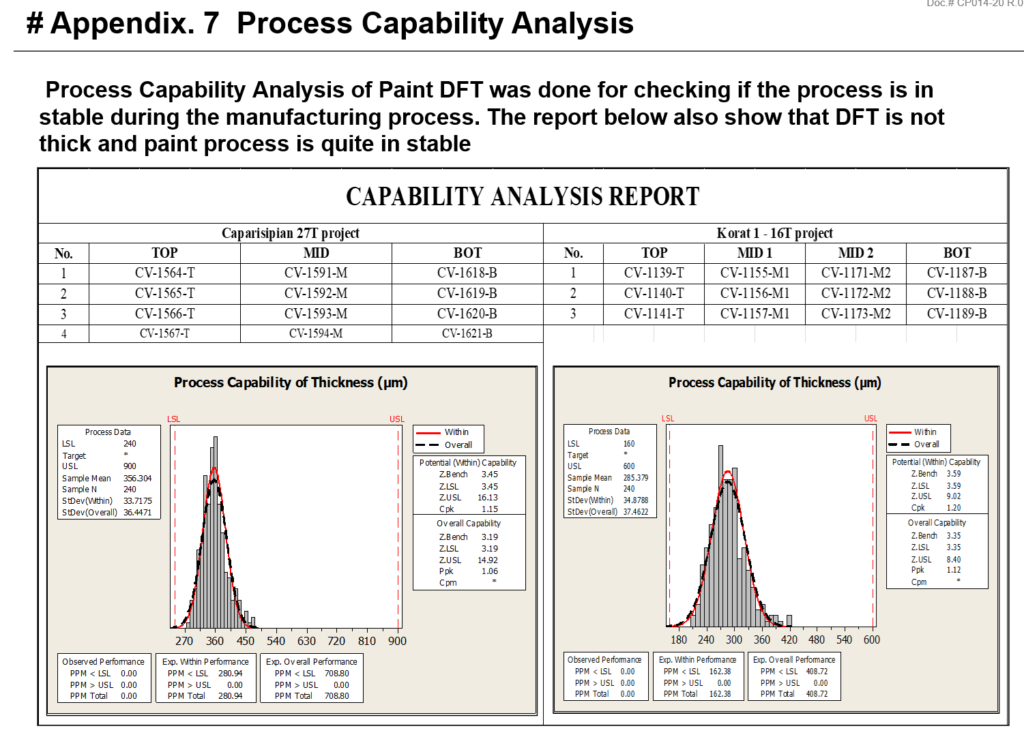
By presenting flawless, untampered historical data, we effectively proved that our internal production application processes were perfectly stable and compliant.
Step 2: Root Cause Analysis
Next, we turned our focus to the material itself. We extracted paint flake samples from the blistered areas of the affected towers and subjected them to microscopic and chemical testing.
The data revealed a devastating chemical truth: the blistering was not caused by external humidity trapped during application. Instead, it was caused by an internal chemical imbalance within the paint batch supplied to us. The epoxy resin and curing agent ratio within the delivered barrels deviated from the certified formula, preventing the paint matrix from cross-linking correctly. This chemical vulnerability caused the paint film to absorb moisture rapidly post-delivery, leading to osmotic blistering and subsequent steel corrosion.
4. The Result: Financial Settlement & Strategic Alignment (Result)
Armed with undeniable chemical data and backed by our bulletproof IPQC logs, we entered the final negotiation room with the paint supplier’s technical directors and insurers. Faced with empirical data, the supplier could no longer deflect blame.
The Financial Resolution
- Paint Supplier Liability: 80% of the total field repair and rectification costs.
- Manufacturer Liability: 20% of the costs (agreed upon to maintain joint commercial goodwill and settle secondary logistical overheads).
This data-driven victory saved our company millions of dollars in direct out-of-pocket expenses and completely cleared our manufacturing team of operational negligence.
Conclusion: Two Uncompromising Lessons for Manufacturing Leaders
This quality crisis reinforces two foundational pillars of Lean Manufacturing Innovation:
1. Data is Your Ultimate Legal and Financial Defense
When a quality claim occurs, opinions are useless. If we had not possessed pristine, automated data tracking of our sandblasting and painting conditions, we would have been forced to swallow 100% of the repair costs. Data transforms a high-stakes emotional argument into an objective, mathematical resolution. And Root Cause Analysis is always powerful to solve the problems.
2. In-Process Quality Control (IPQC) is Non-Negotiable
Quality cannot be inspected into a product at the very end; it must be managed continuously during production. True process control means checking the dew point every single hour, calibrating blasting grit meticulously, and logging every variable. Strong IPQC doesn’t just prevent internal scrap—it acts as your company’s legal insurance policy when external materials fail out in the field.
For global manufacturers, the message is clear: digitize your quality logs, clamp down on process discipline, and always let the data speak for your shop floor.
🔗 Recommended Reading:
7 Wastes : The Definitive Guide to Eliminating Non-Value-Adding Activities
The Power of the PDCA Report in 4 Steps
Discover more from mfginsights.net
Subscribe to get the latest posts sent to your email.