1. Why Do We Wrestle with Recurrent Issues?
This PDCA Report dynamic shows why many organizations and individuals believe they have completely resolved a problem, only to find the exact same issue resurfacing shortly after. This happens because they merely treated the immediate symptoms rather than addressing the underlying root cause. To break this cycle, we need to spin the wheel of continuous improvement known as PDCA (Plan-Do-Check-Act).
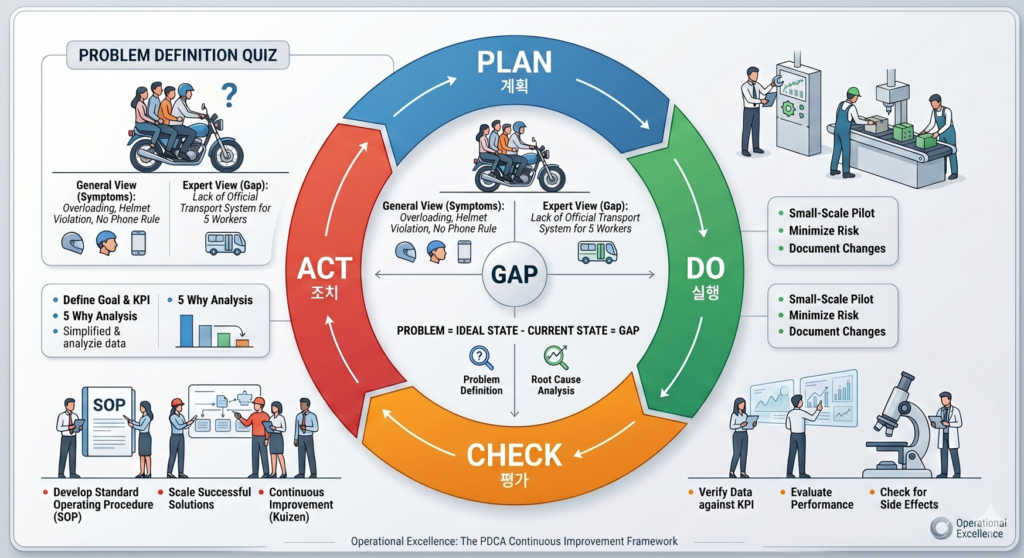
To solve any problem effectively, we must first accurately define what a “problem” truly is.
Problem = Ideal State – Current State
Definition: A problem is simply the Gap between the “Ideal State” (where we ought to be) and the “Current State” (the reality right in front of us).
The exact moment we recognize this gap is where innovation and continuous improvement (Kaizen) begin.
🧠 Quiz: What is the “Problem” in the Image Below?
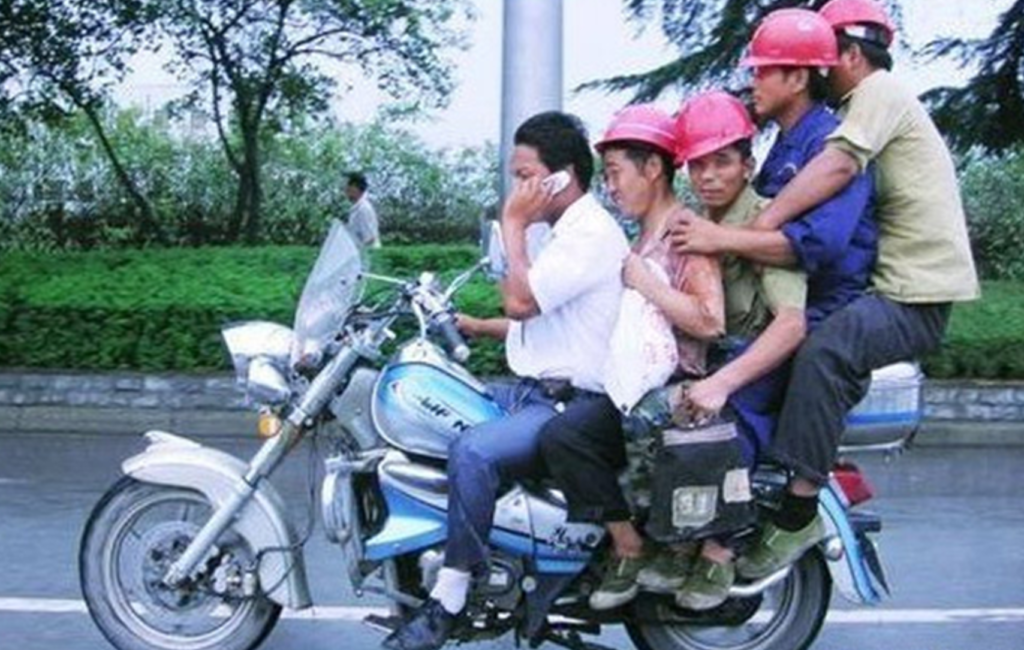
(Note: The photo is presumed to have been taken in China about 30 years ago, showing five people riding on a single motorcycle.)
The Answer:
1) The Conventional Perspective (Focusing on Symptoms)
These are the most immediate, visible safety violations:
- Safety Regulation Violation: Five passengers on a single motorcycle is a severe case of overloading.
- Lack of PPE (Personal Protective Equipment): The operator is not wearing a helmet.
- Distracted Driving: The operator is driving while using a mobile phone with one hand.
2) The Expert Perspective (Focusing on the “Gap”)
An expert looks beyond the symptoms and defines the gap:
- “A structural gap has occurred between the objective to transport five individuals (Ideal State) and the availability of only a single motorcycle (Current State).”
If we dig even deeper, the true Root Cause reveals itself:
- Resource Constraint: There is a lack of appropriate transport infrastructure (e.g., a service vehicle) to move five people safely.
- Distorted Efficiency: There is an absence of a standardized process, leading operators to sacrifice safety to cut costs or save time.
2. Problem-Solving through the PDCA Report
Does your eye immediately catch “reckless driving” or “safety insensitivity”? A true problem solver must see past that and identify the Gap: the absence of a systematic logistics framework to transport five workers to the job site safely. We must uncover the root cause of why five people were forced onto that motorcycle to prevent recurrence.
Would issuing a quick corrective action—like making the driver wear a helmet and hang up the phone—actually solve this? Absolutely not. Tomorrow, they will ride five people on that motorcycle again. Through the PDCA framework, we realize the real problem we must solve is not the “motorcycle” itself, but rather securing proper transportation or optimizing work-scheduling plans.
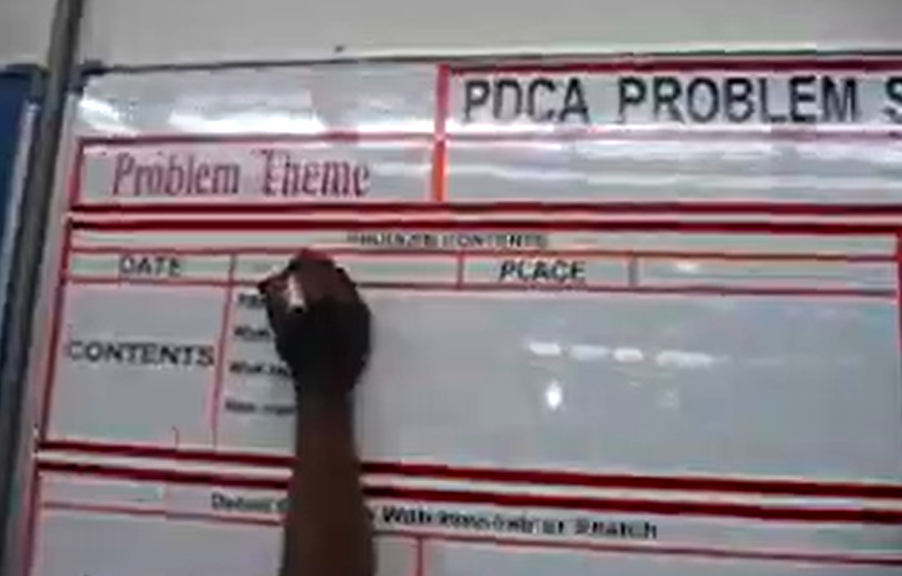
Click here to watch the PDCA Report on YouTube : Case Study(PDCA Report)
🔄 The 4 Pillars of the PDCA Cycle
- P (Plan): Define the problem and rigorously analyze the root cause. This stage demands a strict “Data-Driven Mindset.” Establish concrete targets and Key Performance Indicators (KPIs) outlining what to improve, why it must be improved, and how.
- D (Do): Execute the planned countermeasures on a small scale first. Instead of forcing a massive organizational overhaul overnight, mitigate risks by piloting the change on a specific line or model—much like Tesla’s incremental process optimization.
- C (Check): Evaluate the execution results using objective data. Coldly assess whether the initial performance targets were met and screen for any unforeseen side effects or friction.
- A (Act / Standardize): Once the countermeasures are proven successful, scale them organization-wide and cement them into standard operating procedures (SOPs). If the results fall short, loop back to the Plan phase for a thorough re-analysis.
📋 How to Write a PDCA Problem-Solving Report
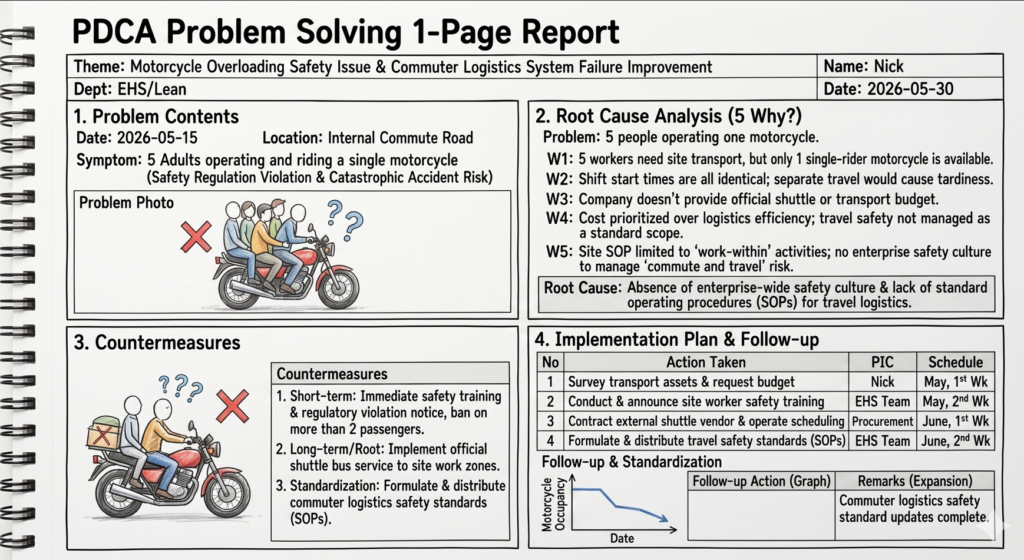
[1] Problem Description (Problem Contents)
- Symptom: Five adults are riding and operating a single motorcycle, causing flagrant safety violations and maximizing the risk of a fatal accident.
- The Gap: The target of securing safe transit infrastructure versus the reality of high-risk motorcycle overloading.
[2] Root Cause Analysis (5 Why?)
We deliberately bypass the lazy conclusion of “operator carelessness” and systematically drill down to find the institutional failure.
- Why 1: Why are five people riding on a single motorcycle?
- Answer: Five workers need to get to the work site simultaneously, but the only available transport equipment on hand is this single motorcycle.
- Why 2: Why do all five people need to move at the same time?
- Answer: The shift start times are perfectly identical; if they travel separately, it creates a bottleneck resulting in late arrivals.
- Why 3: Why are they not utilizing a proper multi-passenger vehicle (e.g., a van or shuttle)?
- Answer: The company has not provided an official shuttle service, nor is there an allocated budget for transit support.
- Why 4: Why has a transit budget or system not been established?
- Answer: The organization prioritizes short-term cost reduction over logistics efficiency, and transit safety has never been viewed as a manageable process standard.
- Why 5: Why is transit safety not part of the standard management scope? (Root Cause)
- Answer: The existing Safety Standard Operating Procedures (SOPs) are strictly confined to “on-site” activities. There is an absence of an enterprise-wide safety culture that recognizes commuting and transit as a process waste (Muda) and an operational risk.
[3] Countermeasures
We utilize brainstorming to deploy immediate containment actions, followed by long-term countermeasures derived from our root cause analysis to eliminate recurrence.
- Short-Term Containment Actions: Immediate safety stand-down, official notice of regulatory compliance, and a strict ban on riding with more than two passengers.
- Long-Term Countermeasures (Act): Implement an official company shuttle service or provide transit subsidies to distribute commuting methods. Restructure shift schedules slightly to eliminate logistical bottlenecks.
[4] Implementation Plan
| No | Action Taken | PIC | Schedule |
| 1 | Assess transit asset availability & request CapEx budget | Nick | 2026-05-01 |
| 2 | Conduct behavior-based safety (BBS) training for floor workers | HR Dept | 2026-05-03 |
| 3 | Sourcing, vetting, and contracting an external shuttle vendor | Procurement | 2026-05-10 |
| 4 | Author, formalize, and distribute Logistics & Transit Safety SOPs | EHS Team | 2026-05-15 |
Notice how visually clear and professional the PDCA Report is below.
5. Standardization and Post-Management
The PDCA cycle is never a linear path with a fixed end; it is a continuous, upward spiral of operational excellence. Implementing this PDCA Report framework inside your organization will drive long-term cultural shift.
The momentum required to build a better tomorrow does not rely on a hidden corporate secret. Rather, it depends entirely on how rigorously, systematically, and faithfully your organization loops through this simple cycle day after day.
🔗 Recommended Reading:
7 Wastes : The Definitive Guide to Eliminating Non-Value-Adding Activities
How to Boost Assembly Line Productivity by 100% with Kaizen
Optimize Line of Balance and Productivity: Paper Ball Guide
Mastering Value Stream Mapping (VSM): A Step-by-Step Guide
Discover more from mfginsights.net
Subscribe to get the latest posts sent to your email.
Very good contents !